Are Drugstore Sunscreens As Good As Luxury Sunscreens?
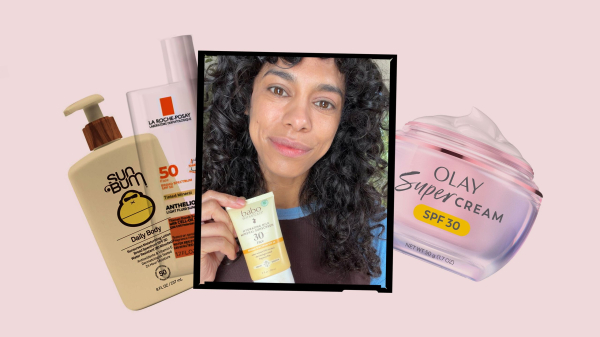
 Collage: Paula Balondo; Source images: Courtesy of Allure editors and brandsSave this storySave this story
The best drugstore sunscreens have come a long way in proving that effective sun protection doesn’t have to come with a luxury price tag. Simply put: “If a sunscreen is properly tested, broad-spectrum and used correctly, it doesn’t need to be expensive to be effective,” says Kseniya Kobets, MD, a board-certified dermatologist in New York. In fact, these Allure-approved SPF formulas also offer elegant textures, invisible finishes, and ingredient lists packed with skin-care heavy hitters on top of strong broad-spectrum protection from UV rays.
That’s good news for your wallet, especially considering how much sunscreen you’re supposed to use. “A shot-glass amount is enough to cover the whole body, and about a nickel- or quarter-size dollop is needed for the face and neck,” says Elizabeth K. Hale, MD, a board-certified dermatologist in New York City. Translation: If you’re applying SPF correctly, you’ll go through your bottle faster than you’d think, which makes finding a drugstore option all the more appealing.
Our Top Drugstore Sunscreens
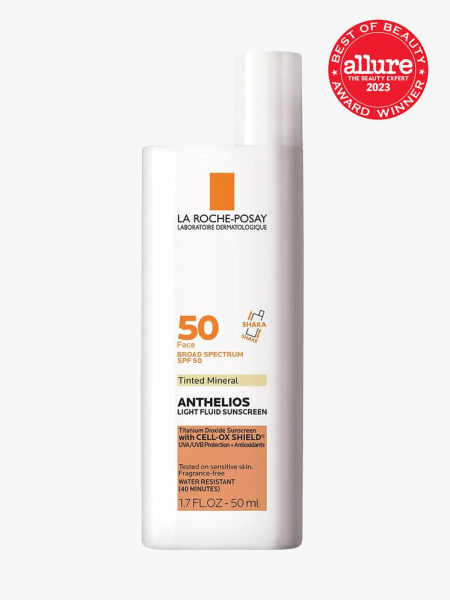
- Best Overall for Face: La Roche-Posay Anthelios Mineral Tinted Ultra-Light Fluid SPF 50, $40
- Best Overall for Body: Sun Bum Daily 50 Body Lotion, $24
- Best for Oily Skin: Neutrogena Ultra Sheer Invisible Gel Face Sunscreen SPF 40, $11
- Best for Dry Skin: Eucerin Ultra Light-Fluid Advanced Hydration Sunscreen SPF 50, $16
- Best Moisturizer with SPF: Olay Super Cream With Sunscreen SPF 30, $35
Frequently Asked QuestionsLargeChevron
- What should you look for in a drugstore sunscreen?
- Are mineral or chemical sunscreens better?
- What’s the benefit of a drugstore sunscreen?
- Meet the experts
- How we test and review products
- Our staff and testers
Considering there are plenty of SPF options out there—especially when you factor in face sunscreens, body sunscreens, chemical and mineral sunscreens, sticks, sprays, and more—you can start here if you don’t know where to begin. These are the best drugstore sunscreens that are Allure editor- and dermatologist-approved and won’t break the bank.
Best Overall for Face: La Roche-Posay Anthelios Mineral Tinted Ultra-Light Fluid SPF 50
 Save to wishlist
La Roche-Posay
Anthelios Mineral Tinted Ultra-Light Fluid SPF 50
La Roche-Posay
Allure commerce editor Sarah Han applying the La Roche-Posay Anthelios Mineral Tinted Ultra-Light Fluid SPF 50 in Light
Sarah Han
Why we love it: La Roche-Posay is, undoubtedly, one of our favorite French pharmacy brands, especially when it comes to (but not limited to) SPFs—and the Anthelios Mineral Tinted Ultra-Light Fluid SPF 50 is a prime example. Countless dermatologists and editors have touted this extra gentle, soothing-thermal-water-infused formula over the years, cementing its “tried-and-true” status. Made with titanium dioxide and zinc oxide, this mineral tinted sunscreen protects against UVA and UVB rays as well as visible light (which can cause hyperpigmentation and contribute to skin aging), it has a milky texture that melts into skin, doesn’t leave any greasy residue behind, and offers ample antioxidant protection. “It provides broad-spectrum protection in a lightweight fluid texture that layers well under makeup,” Dr. Kobets affirms. “The tint helps blend more naturally into the skin while providing additional protection against visible light.” Speaking of the tint, it’s also available in four shades to be more flexible across several skin tones.
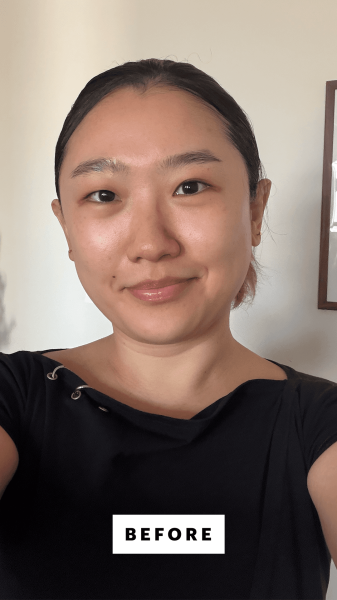
Han before applying the La Roche-Posay Anthelios Mineral Tinted Ultra-Light Fluid SPF 50 in Light
Sarah Han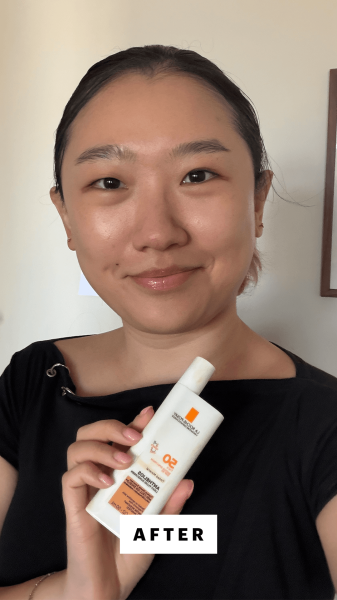
Han after applying the La Roche-Posay Anthelios Mineral Tinted Ultra-Light Fluid SPF 50 in Light
Sarah Han
Tester feedback from commerce editor Sarah Han
LargeChevron
“My biggest hesitations about mineral sunscreens are white cast (and mind you, I'm pretty light-toned, so it's not even a huge barrier compared to others) and pilling. I only have a handful of mineral SPFs that pass the test and this La Roche-Posay sunscreen is one of them. It took me a while to finally try it out, but after hearing so many peers and derms rave about it, I finally did—and I've been super impressed. It leaves my skin feeling soft and looking natural, but not too matte or flat. The coverage is super even and the light shade makes my skin look slightly tanned, which is a nice bonus. Most importantly, no pilling, regardless of whether or not I wear it alone or under makeup. Two thumbs up!” —Sarah Han, commerce editor
Tester feedback from Allure contributor Catharine Malzahn
LargeChevron
“I’ve gone through so many bottles of this tinted mineral SPF that I’ve lost count—it’s been one of my go-to sunscreens for years, both for daily use and on vacation. It has an incredibly lightweight feel, absorbs quickly, and doesn’t leave any greasy residue. It also layers well under makeup—I’ve never experienced any pilling or patchiness, and the tinted formula means I never have to worry about it leaving a white cast. When I first started using it years ago, there was only one shade available that would look a little orange on my pale skin; I’m excited that there are several shades available now that work across skin tones.” —Catharine Malzahn, contributor
More to know
LargeChevron
- Type: mineral
- Key ingredients: titanium dioxide (17%), zinc oxide (8%; not included in the lightest tinted shade), Cell-Ox B3 Shield Technology, iron oxides, vitamin E
- Water-resistant: no
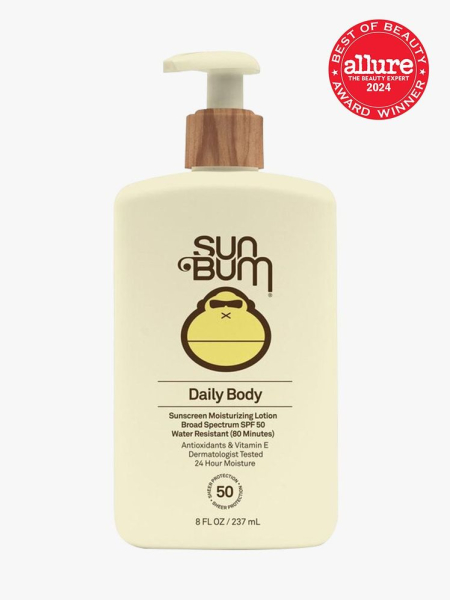
Best Overall for Body: Sun Bum Daily Body Lotion SPF 50
 Save to wishlist
Sun Bum
Daily Body Lotion SPF 50
Ulta Beauty
Why we love it: When your body sunscreen is chock-full of good-for-you ingredients, it becomes an extension of your skin-care routine rather than a separate step you need to remember. Sun Bum’s Daily Body Lotion SPF 50 was formulated with that exact sentiment in mind. Packed with vitamin C to boost radiance, vitamin E to moisturize, and antioxidants to combat environmental stress, the Best of Beauty winner offers major hydration so you can do more than just protect your skin from damaging UV rays. The broad-spectrum formula is water-resistant for up to 80 minutes, making it a great choice if you’ll be swimming or sweating (just don’t forget to reapply!). "I love how it's in a regular lotion pump bottle and rubs in nicely," our tester said. "Plus, it smells like banana candy. So good!"
More to know
LargeChevron
- Type: chemical
- Key ingredients: avobenzone (3%), homosalate (8%), octisalate (5%), octocrylene (9%), vitamin E, antioxidants
- Water-resistant: yes (80 minutes)
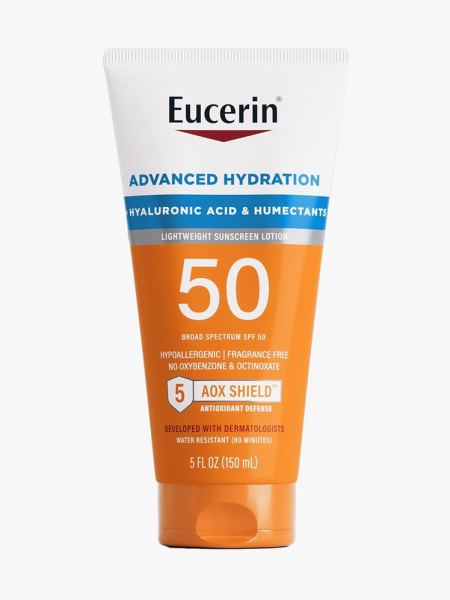
Best for Dry Skin: Eucerin Ultra Light-Fluid Advanced Hydration Sunscreen SPF 50
 Save to wishlist
Eucerin
Ultra Light-Fluid Advanced Hydration Sunscreen SPF 50
Amazon
Allure beauty director Sarah Kinonen applying the Eucerin Ultra Light-Fluid Advanced Hydration Sunscreen SPF 50
Sarah Kinonen
Why we love it: Dry skin benefits from a sunscreen that does more than just protect; it should actively boost hydration throughout the day. That’s where Eucerin’s Ultra Light-Fluid Advanced Hydration Sunscreen SPF 50 steps in. Thirsty skin will appreciate that this lightweight formula contains hyaluronic acid and humectants to hydrate from within, as well as draw in additional moisture. What’s more, it also helps to protect skin against long-term sun damage with the inclusion of the brand’s 5 AOX Shield Technology, which is made up of five different antioxidants (vitamin E, vitamin C, and glycyrrhetinic acid, to name a few). Despite coming with all these skin-care benefits, it manages to remain feeling weightless on the skin, absorbing quickly and blending in seamlessly, so it can be worn on its own or under makeup.
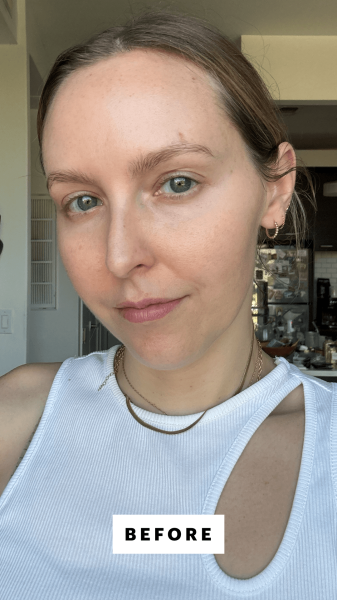
Kinonen before applying the Eucerin Ultra Light-Fluid Advanced Hydration Sunscreen SPF 50
Sarah Kinonen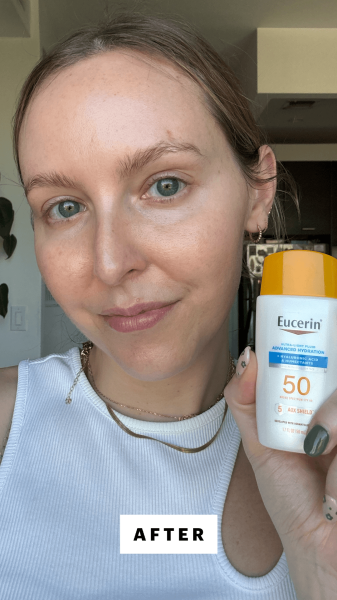
Kinonen after applying the Eucerin Ultra Light-Fluid Advanced Hydration Sunscreen SPF 50
Sarah Kinonen
Tester feedback from Allure beauty director Sarah Kinonen
LargeChevron
tk
More to know
LargeChevron
- Type: chemical
- Key ingredients: avobenzone (3%), homosalate (9%), octisalate (4.5%), octocrylene (9%), hyaluronic acid
- Water-resistant: no
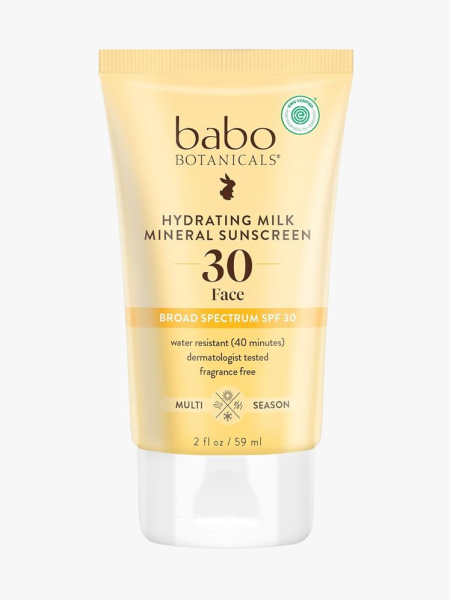
Best for Sensitive Skin: Babo Botanicals Hydrating Milk Mineral Face Sunscreen SPF 30
 Save to wishlist
Babo Botanicals
Hydrating Milk Mineral Face Sunscreen SPF 30
Amazon
Allure senior commerce director Shanna Shipin applying the Babo Botanicals Hydrating Milk Mineral Face Sunscreen SPF 30
Shanna Shipin
Why we love it: Sensitive skin can be picky when it comes to sunscreen—breakouts, irritation, and redness are all possibilities—so if your skin is reactive, opt for a gentle, fragrance-free mineral formula like Babo Botanicals Hydrating Milk Mineral Face Sunscreen SPF 30. (Dermatologists recommend mineral-based sunscreens for sensitive skin in general, as mineral UV filters can be gentler since they sit on top of the skin rather than penetrating it.) Powered by zinc oxide, it provides water-resistant, broad-spectrum protection and has a lightweight, milky texture that applies smoothly and easily. In fact, it feels more like a nourishing moisturizer than a traditional mineral sunscreen (read: no chalkiness here), leaving behind a natural, dewy finish. In addition to the zinc oxide, it’s infused with plant-based emollients, skin soothers like chamomile and calendula, and zero fragrance, so it won’t set off your skin.
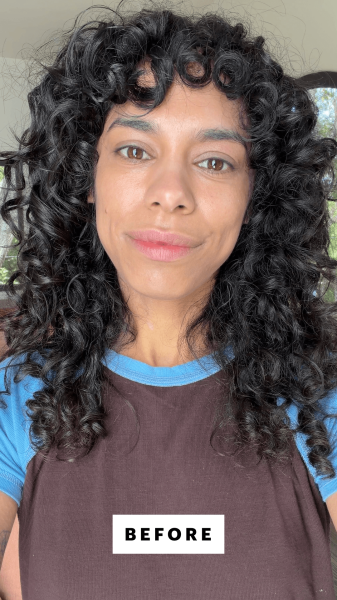
Shipin before applying the Babo Botanicals Hydrating Milk Mineral Face Sunscreen SPF 30
Shanna Shipin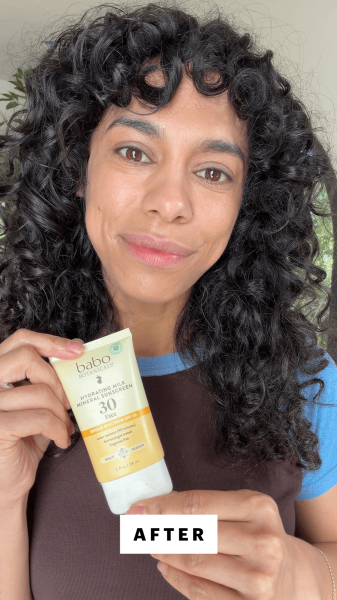
Shipin after applying the Babo Botanicals Hydrating Milk Mineral Face Sunscreen SPF 30
Shanna Shipin
Tester feedback from Allure senior commerce director Shanna Shipin
LargeChevron
“I love a brand that I can use for myself and my kids, and Babo Botanicals makes great sensitive-skin-friendly products that are affordable enough to use on the whole family. This sunscreen leaves no white cast and wears so comfortably on the skin—I was surprised at how elegant it felt when I first applied it, despite being something I could buy at the grocery store. When I spoke with Babo Botanicals' team, they told me they created the formula with all seasons in mind. Sure, I live in Los Angeles and it can feel like there's essentially one season here, but the point is that the all-seasonality makes it comfortable to wear when it’s hot, cold, dry, or humid—you get the picture. My skin usually starts to feel suffocated when I layer too many formulas over it, and I'm happy to say that this sits nicely on top of my moisturizer and under my makeup. (And when I wear it without makeup, it leaves a pretty glow.) The only issue I found is that I stuffed one tube in my diaper bag, and it got absolutely smushed, causing one end to burst open and splatter—thankfully, it's not a super oily mineral product, so it washed out just fine.“ —Shanna Shipin, senior commerce director
More to know
LargeChevron
- Type: mineral
- Key ingredients: zinc oxide (17%), chamomile, calendula, passion fruit piceatannol ferment
- Water-resistant: yes (40 minutes)
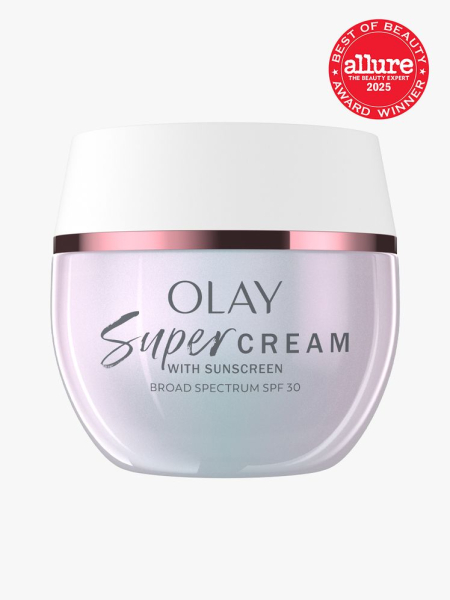
Best for Moisturizer with SPF: Olay Super Cream With Sunscreen SPF 30
 Save to wishlist
Olay
Super Cream With Sunscreen SPF 30
Amazon
Allure beauty director Sarah Kinonen applying the Olay Super Cream with Sunscreen SPF 30
Sarah Kinonen
Why we love it: Moisturizers with SPF combine two essential skin-care steps into one, protecting against UV damage while delivering lasting hydration, moisture, and firming- and radiance-boosting benefits. Good news: Drugstore classic, the Olay Super Cream Sunscreen SPF 30, delivers on all fronts. The multitasking Best of Beauty Award winner combines chemical UV filters with ingredients commonly found in potent serums (like this cream’s beloved cousin, Super Serum), including vitamins C and E, hyaluronic acid, niacinamide, and collagen peptides. Together, they help hydrate, plump, firm, and visibly smooth. Best of all, it absorbs without a white cast or greasy residue, and leaves skin looking bright, radiant, and supple throughout the day.
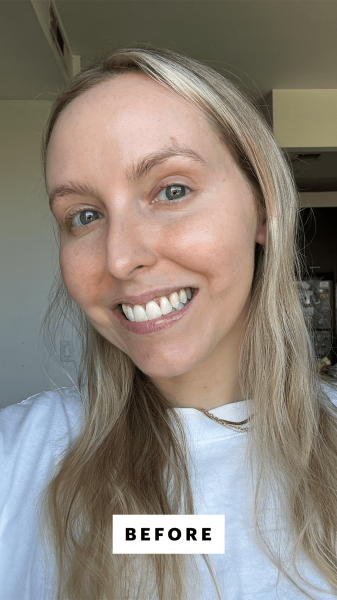
Kinonen before applying the Olay Super Cream with Sunscreen SPF 30
Sarah Kinonen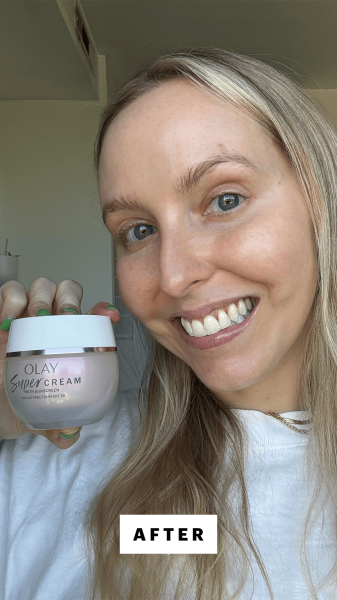
Kinonen after applying the Olay Super Cream with Sunscreen SPF 30
Sarah Kinonen
Tester feedback from Kinonen
LargeChevron
“I'm not usually a multiuse skin care kinda girl. I like my products to do one and one thing only. But lately, because it's so hot outside and I'm usually running late (oops), two-in-ones don't sound so bad. Hence why I've been using the Olay Super Cream SPF 30 on days when I simply just Can Not. It's rich but easily blendable, doesn't leave behind a cast, and has a decent SPF level my dermatologist would approve of. What's not to like?” —Sarah Kinonen, beauty director
More to know
LargeChevron
- Type: chemical
- Key ingredients: avobenzone (3%), homosalate (9%), octisalate (4.5%), octocrylene (6%), hyaluronic acid, niacinamide, collagen peptides, vitamin C, vitamin E
- Water-resistant: no
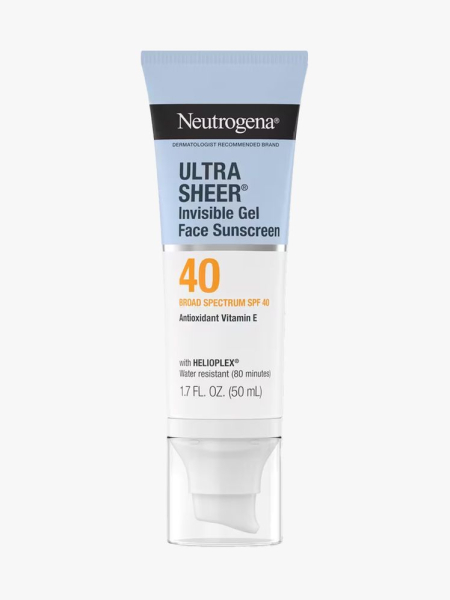
Best for Oily Skin: Neutrogena Ultra Sheer Invisible Gel Face Sunscreen SPF 40
 Save to wishlist
Neutrogena
Ultra Sheer Invisible Gel Face Sunscreen SPF 40
Amazon
Ulta Beauty
Why we love it: Gel sunscreens and oily skin are a match made in heaven. Rather than cream formulations that rely on heavier emollients, gel-based sunscreens are water-based, more lightweight, and absorb quickly with no residue. Neutrogena Ultra Sheer Invisible Gel Face Sunscreen SPF 40 caters to that exactly: The water-resistant gel SPF defends against the sun and won’t leave behind a greasy film or compete with your makeup—the matte finish actually works well under foundation, even acting as a makeup primer to smooth skin. But just because it mattifies doesn’t mean it’s drying—the velvety-touch sunscreen still moisturizes and protects skin with antioxidant vitamin E and hydrogenated castor oil.
More to know
LargeChevron
- Type: chemical
- Key ingredients: avobenzone (3%), homosalate (15%), octisalate (5%), octocrylene (10%), Helioplex Technology, vitamin E
- Water-resistant: yes (80 minutes)
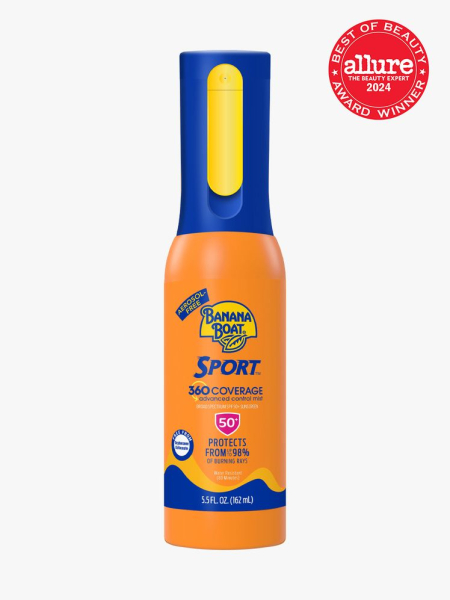
Best Spray Sunscreen: Banana Boat 360 Coverage Sport Sunscreen Mist SPF 50+
 Save to wishlist
Banana Boat
360 Coverage Sport Sunscreen Mist SPF 50+
Amazon
Why we love it: Spray sunscreens are hard to beat when it comes to convenience: They make application and re-application infinitely faster and easier than their lotion counterparts. Allure Best of Beauty winner Banana Boat 360 Coverage Sport Sunscreen Mist SPF 50+ takes that convenience a step further with a smart nozzle that lets you switch between a continuous spray for larger areas and shorter bursts for smaller, harder-to-reach spots (it’s also aerosol-free). Plus, the broad-spectrum chemical formula goes on lightweight and virtually invisible on all skin tones, with none of the sticky, greasy feeling that can make wearing body sunscreen feel like a chore. Water-resistant for up to 80 minutes, it’s perfect for beach days and any outdoor activities that involve swimming or sweating.
More to know
LargeChevron
- Type: chemical
- Key ingredients: avobenzone (2.7%), homosalate (9%), octisalate (4.5%), octocrylene (7%)
- Water resistant: yes (80 minutes)
Frequently asked questions
What should you look for in a drugstore sunscreen?
I look for broad-spectrum protection, meaning there’s coverage against both UVB rays, which cause sunburn, and UVA rays, which contribute to pigmentation, melasma, and premature aging,” says Dr. Kobets. The label on the sunscreen will clearly state if it’s broad-spectrum. In addition to a broad-spectrum sunscreen, dermatologists and the American Academy of Dermatology (AAD) also recommend wearing a formula that’s SPF 30 or higher.
If you’ll be sweating or exposed to water, make sure to choose a water-resistant sunscreen. Like with broad-spectrum, the label on the bottle will clearly state if it’s water-resistant (usually, sunscreens are water-resistant for 40 or 80 minutes). If the label doesn’t mention anything about water resistance, that means it’s not.
Beyond the SPF number and other features on the label, cosmetic elegance matters more than you may realize. “If a sunscreen feels greasy, pills under makeup, or leaves a cast that someone dislikes, they’re less likely to apply enough or reapply consistently,” says Dr. Kobets. So, it’s a good idea to try several formulas until you find the one you really enjoy.
For those dealing with hyperpigmentation, consider tinted sunscreens that contain iron oxides, which help protect against visible light in addition to UV rays. It’s “an important consideration for people suffering from melasma or conditions like lupus or sun-induced rashes,” says Serena Mraz, MD, a double board-certified dermatologist at Solano Dermatology and Associates in Vallejo, CA.
Another factor worth considering is skin type. Fortunately, “many drugstore brands now offer excellent formulations tailored to a variety of skin types, including sensitive, acne-prone, oily, and mature skin,” notes Dr. Kobets, making it easier than ever to find an SPF that fits your individual needs. Overall, sensitive skin types may want to gravitate toward mineral formulas containing zinc oxide or titanium dioxide, which both Dr. Kobets and Dr. Mraz say are typically well-tolerated. Those with melasma or hyperpigmentation should consider tinted sunscreens with iron oxides for added protection against visible light. Meanwhile, oily or acne-prone skin types may prefer lightweight fluids and gels that are noncomedogenic and won’t feel heavy throughout the day. For mature or dry skin, look for hydrating and moisturizing ingredients like hyaluronic acid, glycerin, ceramides, and niacinamide.
Are mineral or chemical sunscreens better?
One isn’t better than the other, necessarily (the best sunscreen is the one you’ll actually wear). While Dr. Mraz strongly advocates for mineral sunscreens and notes that “patients with sensitive skin tend to do much better with mineral-based sunscreens, which include zinc oxide, titanium dioxide, and iron oxide,” other doctors take a more flexible approach.
“I generally gravitate toward mineral sunscreens, especially for patients with sensitive skin, rosacea, eczema, acne-prone skin, melasma, or those recovering from cosmetic procedures,” says Dr. Kobets. However, mineral sunscreens aren’t for everyone. “Some people dislike the texture or white cast associated with mineral formulas and may do better with a chemical sunscreen,” adds Dr. Kobets. “In those cases, a chemical sunscreen is absolutely appropriate if it encourages consistent use.”
Dr. Hale agrees with the flexible take and wouldn’t say that one is better than the other. “At this point, I would say that both physical and chemical sunscreens are safe and they are effective,” she says. In fact, she notes that hybrid formulas containing both chemical and mineral SPF actives can sometimes offer the best of both worlds, since combining the two can help avoid white cast and offer broad-spectrum protection.
What’s the benefit of a drugstore sunscreen?
As with any sunscreen, the best drugstore sunscreens protect skin against harmful UV rays, of course. Simply put, “wearing daily sunscreen is the best way to slow down development of skin cancer and premature aging of the skin,” says Dr. Hale. But drugstore sunscreens offer so much more than just protection. One of the biggest advantages of drugstore sunscreen is accessibility. “Drugstore sunscreens are widely available, affordable, and easy to replace, which encourages consistent daily use and reapplication,” says Dr. Kobets. Dr. Mraz agrees, noting that “more affordable cost is the predominant overarching advantage over a more expensive department store sunscreen.”
Dr. Hale also points out another benefit that could be overlooked: volume. Because of the importance of applying and re-applying enough sunscreen, buying a more affordable option often makes practical sense. “There may be some merit in getting a less expensive sunscreen, where you’re getting more quantity of it for the same price,” she says. If a lower price point makes you more likely to apply the recommended amount and reapply throughout the day, that’s ultimately what matters most.
Meet the experts
- Elizabeth K. Hale, MD, is a clinical associate professor of dermatology at NYU Langone Health, senior vice president of the Skin Cancer Foundation, and board-certified dermatologist in New York City.
- Kseniya Kobets, MD, is a board-certified dermatologist and Director of Cosmetic Dermatology at Montefiore Einstein Advanced Care in New York.
- Serena Mraz, MD, is a double board-certified dermatologist at Solano Dermatology and Associates in Vallejo, California.
How we test and review products
We always enlist a range of testers for our makeup vertical, but, for example, hair-care products and tools are another story. While some hair products can be used across different textures, lengths, curl patterns, thicknesses, and colors (natural and unnatural), they are often created with specific consumers in mind. Many are formulated to address a concern (dandruff, breakage, brittleness) or to work most effectively for a specific hair type (4C curls, wavy hair, gray hair). You wouldn’t want to pick up a purple shampoo that’s only been reviewed by someone with, say, auburn hair, or a diffuser that’s never been tested by anyone with curls, right?
And for our reviews of the best drugstore sunscreens, we enlisted the help of multiple editors, writers, contributors, cosmetic chemists, and makeup artists with a range of experience studying and using these products. Testers considered performance across four primary categories: efficacy, texture, experience, and formula. For more on what's involved in our reporting, check out our complete reviews process and methodology page.
Our staff and testers
A beauty product is a personal purchase. You might be searching for a face cream to address persistent dryness or a new nail product to add to your Sunday self-care routine; you may simply be browsing around for the latest launches to hit the hair market. No matter what you seek or your individual needs and concerns, Allure wants to ensure that you love anything we recommend in our stories. We believe that having a diverse team of writers and editors—in addition to the wide range of outside testers and industry experts we regularly call upon—is essential to reaching that goal.
After all, can we really say a skin-care product is the “best” for people over 50 if the only testers we’ve solicited opinions from are folks who have yet to hit 30? Can we honestly deem a high-end diffuser worthy of your hard-earned cash if it’s never been tested on curls? We’re proud that our staff spans a wide range of ages, skin tones, hair textures, genders, and backgrounds, which means that we are able to fairly assess any beauty product that comes into the beauty closet.
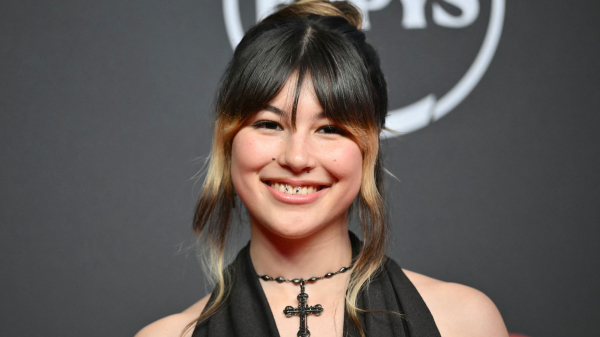
Alysa Liu’s ESPY Hair Is the Ultimate Cool Girl Updo — See BTS Photos
 Photo: Getty ImagesSave this storySave this story
Bold, striped hair has become as closely associated with Alysa Liu as the gravity-defying jumps that made her a world and Olympic champion. And for the 2026 ESPYs, her hairstylist, Anh Co Tran, made sure her hair remained inspo-pic-worthy, sweeping it into an intentionally imperfect updo that managed to balance elegance and edginess—just like the figure skater herself.
Because Liu’s hair was entirely off her neck, it perfectly complemented her black Louis Vuitton halter gown, fully revealing her back—a perfect opportunity to not only wear a beaded cross necklace backwards but also show off her cybersigilism-style lower back tattoo.
Tran says the hairstyle was concocted with Liu's outfit in mind, not to mention her overall vibe. "Inspired by a soft, undone French knot, I wanted to create a style that complemented the dress's sculptural draping while bringing the entire look together," he tells Allure. "I added natural texture and movement to her hair to give it a subtle edge, creating a finish that felt both effortlessly refined and embodied her free spirit."
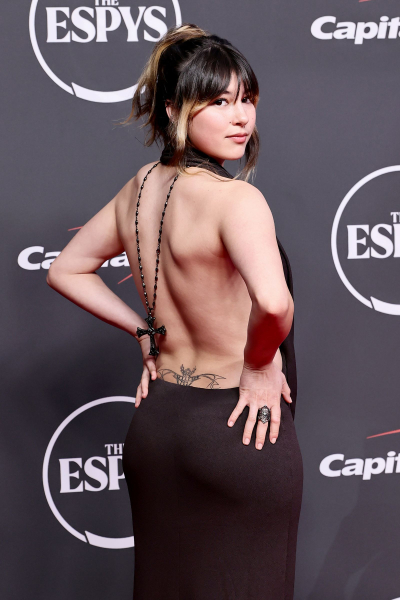 Photo: Getty Images
Liu's high-contrast color also influenced exactly how the updo came together. "We certainly factored Alysa's signature stripes into this look to make sure the patterns of her hair were brought out when it was put up," Tran says. "I made sure the blonde part accentuated the style."
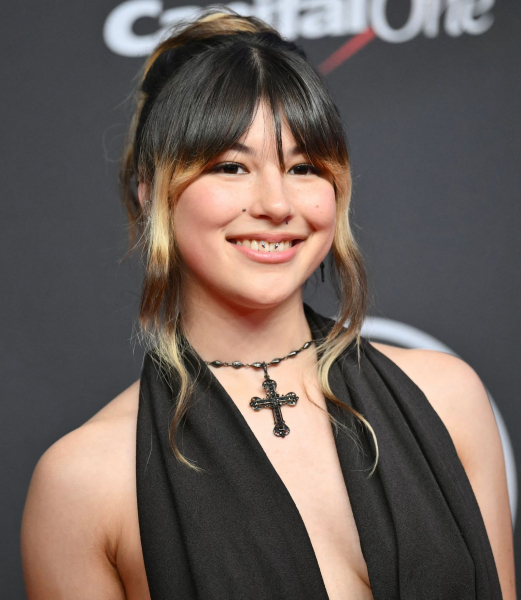 Photo: Getty Images
To create the look, Tran began by applying foam mousse from roots to ends on damp hair, followed by a frizz-eliminating oil. He used the L'Oréal Professionnel AirLight Pro to rough-dry Liu's hair on until it was about halfway dry and then attached the smoothing nozzle to go section by section. “The device's precise heat control allowed me to style efficiently, imparting a beautiful natural sheen without flattening or overdrying the strands,” he says.
After shaping soft, lived-in waves, he worked texturizing paste into the roots for grip, divided Liu's hair into four sections, and twisted each one toward the crown to form the loose French knot, intentionally leaving the ends out and a few pieces unpinned.
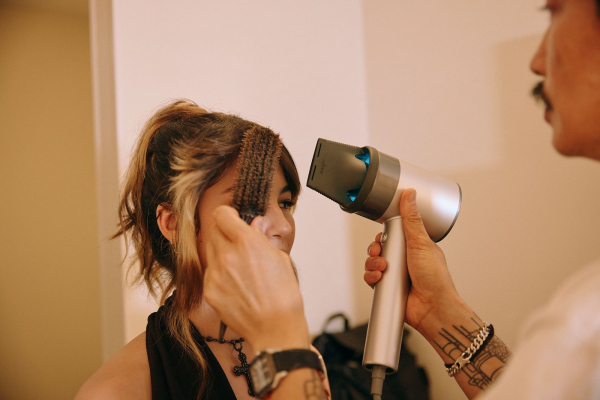 Photo: Duncan Cheng
He hit Liu's curtain bangs with the AirLight Pro, parting them down the middle and leaving longer front pieces loose to frame her face. A styling cream, hairspray, and a final mist of texturizing spray locked everything in place while maintaining the airy movement that made the style feel polished but not overly “done.”
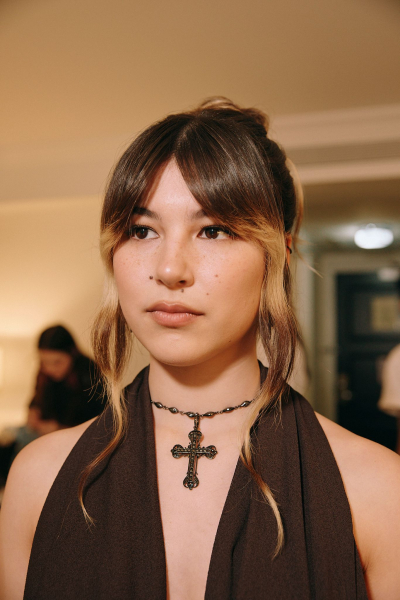 Photo: Duncan Cheng
Liu’s new ESPY award for Best Breakthrough Athlete might have been one of the most coveted trophies of the night, but thanks to that luminous updo, it certainly wasn't the only thing reflecting the spotlight.
Why Dark Manicures Should Be Worn in the Summer
 Photo: StocksySave this storySave this story
I’ve been seeing the same nail tech since 2024, and she and I have a few mutual understandings: We keep the chatting to a minimum, know an almond-oval hybrid shape looks best on my hands, and cash tip over Venmo. But the most important and sacred bond we share is knowing that OPI’s Lincoln Park After Dark is a perfect—maybe the perfect—manicure shade. “That’s my favorite,” she told me when I requested it at our very first appointment two years ago. We’ve been together ever since.
Unfortunately for my nailbeds, she’s been away visiting family this month, so I had to book an appointment with a different tech last week—one I’ve never seen before. As I settled into my chair and requested she sand off the bright red from my gel manicure and replace it with the inky purple shade, she almost fell out of her seat. “That’s a winter color,” she said, eyes wide, mouth agape, like I just asked her to stab me with her file. “Are you sure?”
And reader, I was sure. Launched in 2005, Lincoln Park After Dark is one of OPI’s most iconic colors, a word I don’t throw around lightly. It’s been a staple in my beauty drawer since I was a teenager, when my nails were bitten and ragged from after school field hockey practices. When it chipped away enough to reveal my naked nail, I’d layer on coats of the dark purple stuff without fully removing what was below it. Now, was this a good idea? Probably not. But I’ll give my 15-year-old self a pass.
As an adult who now has a standing bi-weekly appointment and no longer plays any kind of organized sport, my nails are in far better shape and the shade continues to be a constant in my life, outlasting many friendships and relationships. I wore it for my first day of work at Allure and am wearing it right now as I type this (the nail tech did indeed end up honoring my request) smack dab in the middle of July, experiencing what can only be described as a truly grotesque heat wave.
Magazines and other media—even Allure—have long reported that the shades of color we don should change with the seasons: In warmer months, we switch from dark denim to white linen, tap on pastel blushes, and add in strips of glowy highlights to our hair. Usually, nail colors follow suit: The rules of society tell us that bright, shimmery hues are meant to be swapped in once the temperatures rise above 65 degrees, so nails often switch from navy to sky blue, burgundy to cherry red, and moss green to matcha.
Maybe it’s my Aquarius rising, but I don’t love rules. Rejecting how things are supposed to be and adding my own twist is very much my preferred method of operation. So instead of abandoning my moody manicures, I tend to double down—deep shades tickle something in my psyche that a pale neutral could never. I won’t restrict myself to status quo aesthetic choices when my heart is telling me to please, please, choose the dark midnight option that borders on goth.
It’s not just because I have faint sprinklings of an individuality complex, though—I’ve long been attached to the idea that dark manicures are the most flattering: Lighter shades seem to disappear into my pale-pinkish skin, causing my fingers to look corpse-like and dull. But a deep shadowy shade, like Essie’s Caviar Bar or Olive & June’s It’s Actually Dark Green, offers high-contrast to my hands in a way that deeply soothes my soul. While I do admittedly experiment with milky whites and vivid reds in the summer months, I still tend to go back-and-forth between something new and my tried-and-true.
Of course, if you want to continue wearing a punchy orange or a hot pink on your fingers this summer, be my guest. If you never want a dark color to come close to touching your tips, great! That’s the beauty of beauty, after all—it’s subjective, it’s individual, and the only person that has to constantly look down at your hands is yourself.

Manifesting Extends Its False Promise to Beauty
 Illustration by Molly Dickson; Photos: iStockSave this storySave this story
For 20-year-old Lauren, from Ontario, her best-kept beauty secret isn’t stashed in her makeup bag or hidden in her medicine cabinet—it's in her mind. She has spent years staring at other women's faces on Pinterest, cataloguing features she wants for herself, not as inspiration, but as a tool for visualisation. According to Lauren, having a clear image in her head of the physical characteristics she wants to attain, be it straight teeth or long hair, means she is better able to manifest those desired changes in her appearance. “The image doesn’t have to be a celebrity or model,” she explains. “It’s just whatever I resonate with and aspire to look like.”
The idea that, through the power of belief, we can effectively “think” a goal into becoming reality was instilled in Lauren as a young child. Her mother was a devotee of Rhonda Byrne’s The Secret, the 2006 best-selling book that helped bring manifesting into the mainstream. But it wasn’t until Lauren’s teenage years, after she stumbled across a video from HotHighPriestess—an internet personality with 1.2 million Instagram followers and a $7-a-week manifestation app called Stella—about how she had manifested her dream body with just her thoughts, that Lauren began to consider whether it might be possible to use this practice to alter her own appearance. She was already deep in the world of YouTube beauty tutorials, so for her, it felt like the next logical step.
At the start, Lauren’s goal was an overall “glow up”: clearer skin, “striking” eyes, healthier hair, better style. She would set aside time—from five minutes to half an hour—to visualise her desired look. The results came gradually, Lauren says, claiming that she saw her skin clear up, her eyes lighten slightly, and her cheekbones become more pronounced within a couple months. The changes didn't seem dramatic to her at first, but she got the sense manifestation was working when people began to compliment her appearance. More specifically, she manifested a “lethal face card,” using the phrase as part of an affirmation. “People then started commenting on my TikTok: ‘Oh my God, you have such a lethal face card’, ‘Your face card is so lethal’,” she says. “That kind of freaked me out.”
Peddling an illusion
Lauren isn’t alone in her belief in manifestation. Almost two decades after The Secret, Roxie Nafousi’s book Manifest: 7 Steps to Living Your Best Life, published in 2022, sold more than a million copies worldwide. In 2024, the Oxford Dictionary named “manifesting” its Word of the Year. Across social media, there are videos of people claiming to have manifested everything, even their soulmate or dream home. It was only a matter of a time until people like Lauren began applying the method to their physical appearance, with videos of people claiming to have achieved bigger breasts, different eye color, longer hair, and even increased height through thought alone racking up millions of views (which, given the nature of social media, is obviously not a measure of credibility). By focusing on changing immutable elements through mind power alone, the manifestation practices of Byrne and Nafousi—which promote aligning visualization with action—entered the world of magical thinking.
Naturally, an entire cottage industry has emerged around the trend. Self-styled “coaches,” “gurus,” and manifestation experts are profiting from promises that say, with the right mindset, they can teach their followers how to think themselves hot. Some have apps, like HotHighPriestess, while others offer online mentoring sessions; many create or promote beauty subliminals, audio recordings containing hidden, positive affirmations that can now be found all over YouTube and Spotify. “There is a money making machinery behind all of this manifesting content,” notes Anna Schaffner, PhD, a former professor of cultural history at the University of Kent. “The message is often deeply commercial, but couched in esoteric and spiritual language.”
Among these manifestation coaches is Kimberlee, age 26. She promises to help clients achieve physical transformations through one-to-one mentorship sessions priced at $350 for an hour. In most states, that’s more than the cost of an hour-long (out-of-pocket) appointment with a licensed therapist (which Kimberlee is not).
Kimberlee turned to manifesting appearance changes in 2019, during a difficult period in her life. After losing her mother, she’d gained weight. When she tried to lose it, nothing seemed to work. She had already been practicing manifestation in other areas of her life, particularly for financial success, so the idea of using it for weight loss didn’t feel entirely out of reach. “It dawned on me one time: I could actually just manifest this,” she says, claiming the pounds dropped off over the next five months. “I wasn't working out as hard as I used to, I wasn't starving myself like I used to,” she recalls of the period when she was manifesting weight loss. “I was eating just about anything that I wanted to. It felt like [the weight] magically fell off.”
“At the end of the day, a lot of how we look is genetically determined and constrained by our resources."
Kimberlee now coaches people in how to attain their own manifestation goals. She’s currently working with a client who is hoping to achieve a smaller nose. “I repeatedly tell her: ‘You have your dream nose,’” Kimberlee says of their sessions. “It’s working, because she tells me there has been some movement—she’s noticing her nose getting smaller.”
It probably shouldn’t be surprising that what these coaches are spouting is resonating with some audiences. According to Spate Data, the “manifesting” hashtag receives 109.9 million weekly views on TikTok, with #glowup and #glowuptips—two common hashtags used alongside manifesting content—each receiving hundreds of thousands of views weekly (117.9K and 305.2K respectively). Some people are also engaging in beauty manifesting as part of their effort to “looksmax,” a trend that was birthed in manosphere spaces; though, it’s important to note, most manifesting is free of the toxic overlay of looksmaxxing.
In our time-strapped world, the idea of a quick fix has never seemed so appealing. But there’s also the fact that, as researchers suggest, humans are “cognitive misers,” meaning we often rely on mental shortcuts to make fast and efficient judgments in new or time-pressured situations. “People are relatively poor at detecting deceptive information from others, because we usually just take them at face value,” says Janet Boseovski, PhD, a professor of psychology at the University of North Carolina at Greensboro and co-author of Beyond Body Positive, whose main areas of research include body image and child development.
With this in mind, it isn’t hard to understand how ”unscientific claims—in which influencers or coaches offer quick fixes, or simple strategies—appeal to many people precisely because they offer quick and seemingly simple solutions,” Dr. Boseovski adds. On top of this, says Charlotte Markey, PhD, a professor of psychology and director of the health sciences program at Rutgers University, “A promise like ‘you can think your way into a better face or body’ offers a seductive sense of control in a culture that constantly tells young women they are being evaluated visually.”
These coaches are peddling an illusion, Dr. Markey continues, pointing out that, “At the end of the day, a lot of how we look is genetically determined and constrained by our resources—money, time, other responsibilities.”
Manifesting can be understood as a way of trying to escape these constraints, and is a practice people often turn to in difficult times. For instance, in 2020, as COVID lockdowns began, Google searches for “manifesting” increased by 600%. Post-pandemic, in a time of economic and political uncertainty, it doesn’t feel like a coincidence that the phenomenon continues to be enormously popular.
Laila, 19, is among those drawn to the idea of manifesting beauty as a faster and more affordable way to reach her aesthetic goals, saving her money she might have spent on treatments and expensive products. After manifesting better grades in school, she decided, at age 16, to shift her focus to achieving a slimmer face, clearer skin, and longer hair. Like Lauren, she says the changes were subtle at first. “You see yourself every single day and you don’t really notice it,” she explains. “Then you look at a photo from a year ago and you’re like, ‘Oh wow.’”
When the placebo effect and puberty collide
If it’s hard to rationalize how young women like Lauren and Laila are convinced they’re able to change biological traits like face shape or eye color, there are psychological reasons why some people will report seeing results, says Dr. Markey. “Expectation effects, placebo responses, selective attention, and confirmation bias can all shape what people think they notice,” she points out. “Research shows that if we believe something to cause a change (we believe in a placebo), we may look at ourselves and think we look better because we expect to.”
"People ask me, ‘Oh, what type of product do you use?’ I tell them, ‘Just manifest it.’”
Dr. Markey also thinks it’s not a coincidence that almost all of the people Allure spoke to for this article report seeing changes in their teenage years, a time of immense and fast-paced physical and psychological change. In younger people, “some ‘results’ may also reflect ordinary developmental change over time,” she explains, “since puberty and ongoing maturation naturally change bodies and faces whether or not someone is using manifestation content.”
Laila admits to not being totally certain of the role puberty may have played in her transformation; but she’s convinced that manifestation is, at least, mostly responsible for the changes she saw. She recalls how, in high school, she didn’t have money for expensive products, like high-end shampoo and conditioner: “Still, my hair was really, really long, because I would manifest long hair growth,” she says. “I see ads [for beauty products], and I just feel like it’s a waste of time. You truly only need yourself. People ask me, ‘Oh, what type of product do you use?’ I tell them, ‘Just manifest it.’”
It’s not just the physical changes that occur during puberty that make teenagers vulnerable to beauty manifestation; peer pressure at school and from society at large also play a big role. Says Dr. Boseovski, “Adolescents, who are very sensitive to the rewards of peer acceptance and approval, may be more likely to accept guidance of this sort from peers or other influential models they admire, and less likely to rely on science-supported claims.”
Girls also tend to engage in more self-comparison at this age, making them more susceptible to this type of messaging, Dr. Boseovski notes. (Lauren, for example, says that she was initially attracted to manifesting content because of her insecurity, recalling, “I felt like I wasn’t the prettiest girl in the room, like I was never chosen.”) “Girls tend to lose the ‘rose-colored’ glasses that most have in early childhood where they feel very positive about themselves,” adds Dr. Boseovski. On top of this, “media exposure increases with age, and teens are inundated with messages about how they should look and ideas for how to ‘fix’ their ‘flaw.’”
An unhealthy focus
It’s true that research does suggest that mindset can influence behavior; and let’s be honest, actively engaging in positive thinking is certainly not a bad thing for young women. But what newer types of beauty manifesting promote—the idea that we can change often immutable things about our appearance through the power of our mind alone—is not only misguided, according to experts like Dr. Boseovski, it can also backfire, even if you go in with the best intentions.
She draws a clear distinction between visualization plus action, such as imagining yourself with a slimmer physique while also going to the gym, and magical thinking (especially when it comes to changing things that aren’t actually changeable, like height or eye color). “Certainly, thinking positively and setting goals for oneself can be associated with success when they are appropriately coupled with behavioral change,” Dr. Boseovski says. “But repeatedly using techniques like this that aren’t well grounded in science can lead to feelings of ‘learned helplessness’—giving up on your goals because nothing you do is working—and becoming passive. So, in the long term, this becomes even less of a tool for bringing about change.”
And while manifesting coaches claim to provide their followers improved confidence, Dr. Markey worries that these practices will only have the opposite effect. “One risk is that it keeps young women focused on the idea that their bodies are ongoing self-improvement projects rather than bodies worthy of care and respect right now,” she says, adding that: “Research on adolescents and young women suggests that appearance-focused environments, such as a bar or party, can increase self-comparison, self-objectification, and body dissatisfaction, especially during developmental periods when body image is already more vulnerable.”
The dangers of turning insecurity into daily ritual
For 20-year-old Kat, from New York, attempting to manifest appearance changes only worsened her self-loathing. From as early as age 10, she started listening to YouTube videos of subliminals in pursuit of things like fuller lips and longer eyelashes. “I was getting bullied at the time for my appearance, my weight, and just how I looked in general,” she says. “It felt like an easy solution to an issue that I did not know how to solve.” The specific changes she was chasing were very much shaped by conventional beauty standards. “I wanted to look like a model out of a magazine,” she recalls. (She’s not alone: The subliminal “Face Like a Model” has over 1.2 million streams on Spotify.)
Kat would play these subliminals, which could be up to 10 hours long, overnight. “It meant my appearance was literally the last thing I thought about before bed and the first thing I thought about when I woke up,” she says. Not seeing the desired results after listening to subliminals for some months was crushing: “I would think a lot about why the effort I was putting in manifesting wasn’t showing up, and I’d just be so pissed that the universe wasn't giving me what I wanted.”
From Dr. Markey’s perspective, the concern isn’t that subliminals and manifesting in general won’t magically change someone’s lips or eye color (they won’t); “it’s more that repeated appearance-focused listening may intensify body monitoring, reinforce dissatisfaction, and turn insecurity into a daily ritual,” she explains.
“Repeated exposure can make certain ideas feel more emotionally important or ‘true,’ even when there’s no scientific basis for them,”
The fear, for mental health experts, is that this unhealthy physical fixation could make people more attuned to what society says are their flaws. “Repeated exposure can make certain ideas feel more emotionally important or ‘true,’ even when there’s no scientific basis for them,” says Clint Salo, MD, the medical director of the Grove Recovery Community and a board-certified psychiatrist in Irvine, California, who specializes in behavioral health and risk-related decision making. “The brain naturally pays more attention to thoughts and cues that are repeated often, especially during adolescence.”
Of course, these messages may not be harmful just within online manifesting communities. “It’s not the case that we should only worry about messaging that purports to be subliminal. We should be as worried about the messaging [of inadequacy] that is out there in the world that girls and women are exposed to every single day, consciously,” says Dr. Boseovski. “This additional messaging may just be adding fuel to the already raging fire.”
A self-esteem crisis for women
Theiadora, a 21-year-old from the Netherlands, has more recently started to reflect on the harms of using certain subliminals for making changes to her physical appearance. She believes that some of the earlier subliminals she tried as a teenager did lead to actual changes, such as one recording specifically aimed at making curly hair straight. But she also recognizes that some of the “skinny girl” subliminals she used in the past, which contained affirmations about being able to stay full without eating, contributed to unhealthy eating habits and obsessive thinking about her body.
“It made me feel restless, like I was always looking for something about myself to change,” she says. “I started looking at myself a bit differently, more through the lens of what could be improved, rather than what already felt good.”
Dr. Salo says that the repetition of messages like “I can stay full without eating” can normalize restrictive thinking around food. “Over time, that may encourage someone to ignore hunger cues or associate eating with guilt,” he explains. “In vulnerable individuals, especially teens, that can contribute to unhealthy patterns around eating and body control…. If results don’t happen, people may assume personal failure. That can lead to shame, which tends to persist and lower self-esteem.”
It took a painful breakup a couple years ago for Theiadora to decide that it was time to stop listening to these kinds of subliminals. She has since switched to messages that focus more on self-love and developing confidence instead of specific appearance changes.
Rather than questioning the practice of manifesting more broadly, though, Theiadora thinks the problem lies with a handful of rogue subliminal creators. “Some creators use wrong or negative affirmations, so you can end up manifesting the opposite of what you want,” she says. Theiadora now only looks to “trusted” creators who are “careful and intentional” with their affirmations. She also makes her own subliminals that she shares on YouTube; she recently created a subliminal claiming to help people grow taller.
From Kimberlee’s perspective, when clients say they aren’t seeing results, the issue lies in the mindset of the client and level of commitment. “They might not be persistent enough or they don't want what they say they want bad enough,” she says. “I remind them, ‘Don’t be so hard on yourself, either. Give yourself a break. Do a lot of self-care.’”
The self-blame people feel when they don’t see results can be exacerbated when a coach reinforces the idea that they’re not manifesting correctly, says Dr. Markey. “When manifestation practices fail to produce visible appearance changes, young women may feel disappointed, frustrated, ashamed, or even more preoccupied with their looks,” she explains. “Instead of reducing insecurity, these practices can reinforce the idea that the body is a problem to fix and that failure reflects a personal deficiency, rather than an ineffective method.”
For Kat, not seeing results ultimately prevented her from finding self-acceptance. “It put me in this weird limbo spot where I felt like I can get more beautiful, but I don't truly know how, because I'm not letting myself,” she says.
Laila also acknowledges moments of frustration with manifesting, especially when it comes to her acne: “I think to myself, What am I doing that’s wrong? But then I remember that wavering delays result, and that the only person that can really drag yourself out of it is you.”
Likewise, whenever Lauren is struggling to see results, she blames her own impatience. “The main challenge [with manifesting] is staying calm and consistent, instead of forcing it,” she says. Currently, Lauren is trying to manifest a straight jaw for a more symmetrical face, but it’s something that has been taking longer than she anticipated: “My jaw is crooked because I held back emotionally,” she says. “If I want to manifest it straight, I need to work through past trauma.”
All of the experts we spoke to repeatedly emphasize just how damaging this constant effort to alter our physical appearance can be. The negative effects of social media on young women’s body image, in particular, has been well documented over recent years, resulting in research and legislative action by some governments. “For several decades now, science has known that chronic dissatisfaction with one’s body or appearance is harmful for both psychological and physical health. So this is truly a public health issue for women,” says Dr. Boseovski. “Body dissatisfaction is related to mental health issues, including depression, anxiety, eating, and body dysmorphic disorders. But it is also related to more ‘everyday’ issues with our self-image, such as a tendency to ruminate on negative experiences, and a hyper-sensitivity to the negative.”
Kat knows now that she was never to blame for her manifesting goals that failed to materialize, and credits therapy with helping her to develop a better relationship with her body. “I definitely realize now it’s not possible to manifest physical-appearance changes…. but I’ve been feeling better in how I perceive myself,” she says. “Nowadays, I try to treat myself more as a friend and someone I love closely, rather than as my enemy.”
9 Best Foundations for Mature Skin That Smooth Texture and Blur Lines
 CARLOS and ALYSESave this storySave this story
As your skin changes, your makeup should evolve with it, and that starts with finding the best foundations for mature skin. These formulas deliver even texture, a healthy radiance, and fine-line-blurring coverage without clinging to dryness or settling where you don’t want it. Many of today’s standout bases are infused with skin-care power players such as hyaluronic acid, vitamin C, and even retinol to tackle common concerns—think: fine lines, dark spots, redness, and dehydration.
Our Top Foundations for Mature Skin
- Best Overall: Armani Beauty Luminous Silk Foundation, $69
- Best for Dry Skin: Chanel Les Beiges Healthy Glow Foundation, $69
- Best Medium Coverage: Lancôme Rénergie Lift Makeup Foundation SPF 27, $63
- Best Lightweight: Jones Road Beauty What the Foundation, $46
Frequently Asked Questions
- What to consider when looking for a foundation for mature skin
- How to prep mature skin for foundation
- How to apply foundation on mature skin
- Meet the experts
- How we test and review products
- Our staff and testers
We put in the legwork—consulting makeup artists and leaning on our trusted team of editors—to uncover the foundations that stay smooth, flexible, and crease-free, no matter how expressive you are.
Best Overall: Armani Beauty Luminous Silk Foundation
 Save to wishlist
Armani Beauty
Luminous Silk Foundation
Nordstrom
Sephora
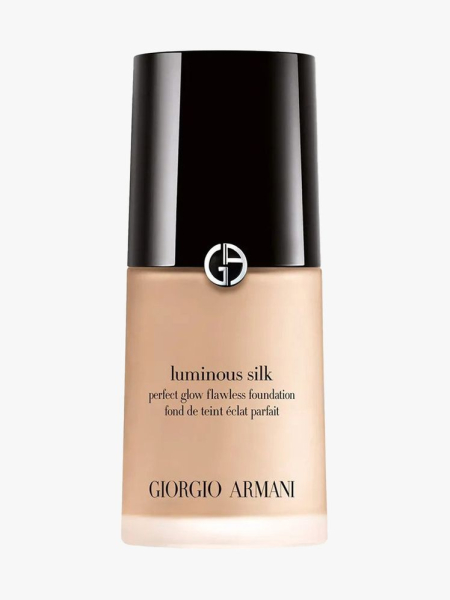
Why it's worth it: Constantly name-dropped by makeup artists and enthusiasts, Armani Beauty’s Luminous Silk Foundation has earned its icon status with ample accolades, including an Allure Best of Beauty Award. Countless makeup artists, including Beau Nelson and Amrita Mehta, count Meghan Markle's favorite foundation as a go-to for mature clients due to its soft-focus finish and weightless texture. "This one has been a staple in my kit for over 15 years," New York City-based makeup artist Lisa Aharon attests. "It blurs pores and fine lines while leaving the skin with a fresh finish," she says, adding that the medium coverage is ideal for concealing sun spots and other imperfections such as blemishes.
New York-based makeup artist Lauren D’Amelio Ventre loves that it’s packed with hydration—something aging skin needs more of—and helps make the skin look plumper and smoother. “It leaves a beautiful and flawless finish, and the formula melts into the skin seamlessly,” she says. Even though it’s ultra-hydrating, it’s also lightweight and won’t turn greasy throughout the day, which is why she often reaches for it for long events like weddings.
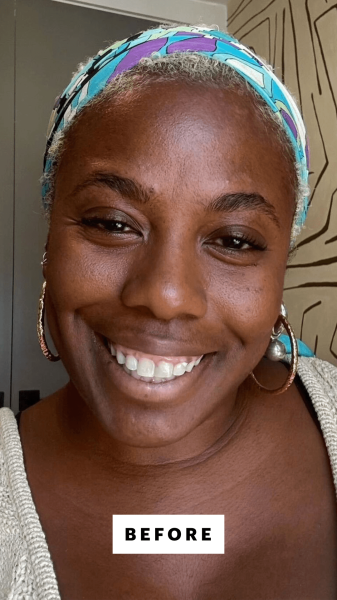
Allure creative director Amber Venerable before applying the Armani Beauty Luminous Silk Foundation
Amber Venerable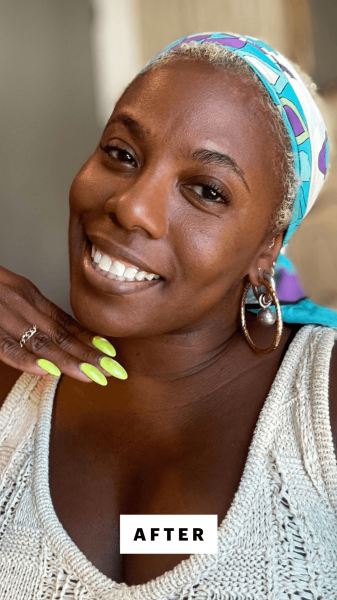
Venerable after applying the Armani Beauty Luminous Silk Foundation
Amber Venerable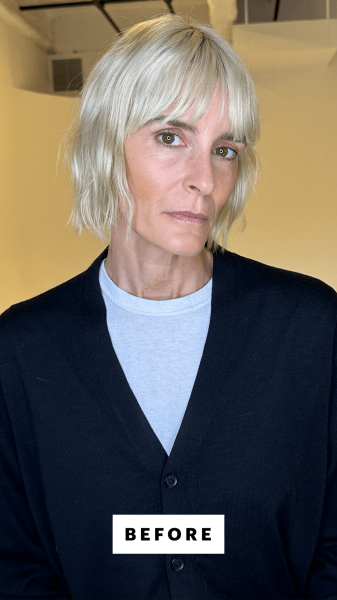
Allure tester before applying the Armani Beauty Luminous Silk Foundation
Allure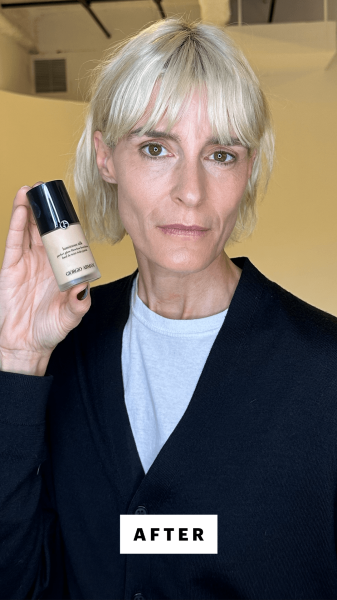
Allure tester after applying the Armani Beauty Luminous Silk Foundation
Allure
Tester feedback from creative director Amber Venerable
LargeChevron
“I like minimal to light foundation coverage and I thought this had great coverage while also being very lightweight on my skin. My skin was radiant and glowing, so it lives up to the term luminous to say the least! Love it!”—Amber Venerable, creative director
More to know
LargeChevron
- Key ingredient: glycerin
- Finish: radiant
- Coverage: medium-to-full
- Shades: 44
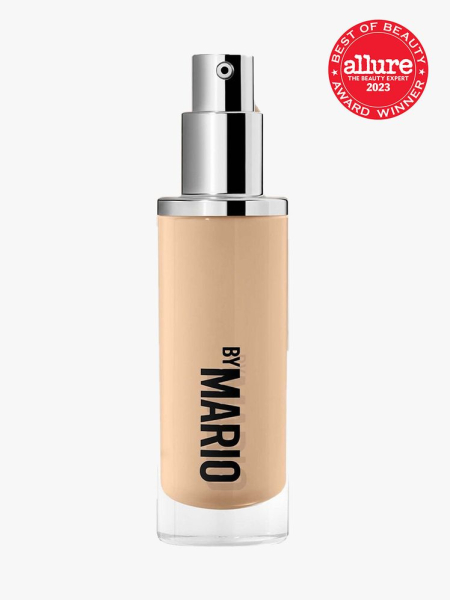
Best Full-Coverage: Makeup by Mario SurrealSkin Foundation
 Save to wishlist
Makeup by Mario
SurrealSkin Foundation
Sephora
Allure tester applying the Makeup by Mario SurrealSkin Foundation
Allure
Why it's worth it: Our 2023 Best of Beauty Award winner for best full-coverage liquid foundation went to Makeup by Mario's SurrealSkin Foundation—but don’t let the “full-coverage” label fool you. This formula is incredibly lightweight, buildable, and never cakey. Karol Rodriguez, a NYC-based makeup artist, said this foundation is one of her go-tos for people with exceptionally dry skin, which mature folks are prone to. Founder Mario Dedivanovic recommends using just one pump, applying it where you need the most coverage, and building from there. That’s easy to do thanks to skin-friendly ingredients like polyglyceryl-6 polyricinoleate (an ester that gives it a silky, glowy—not greasy—finish), plus hydrating staples like glycerin, grapeseed oil, and sunflower oil to help lock in moisture.
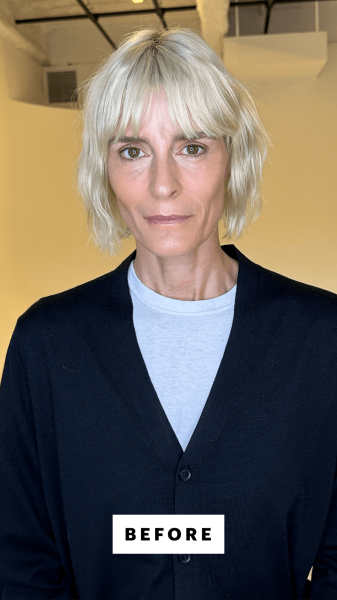
Allure tester before applying the Makeup by Mario SurrealSkin Foundation
Allure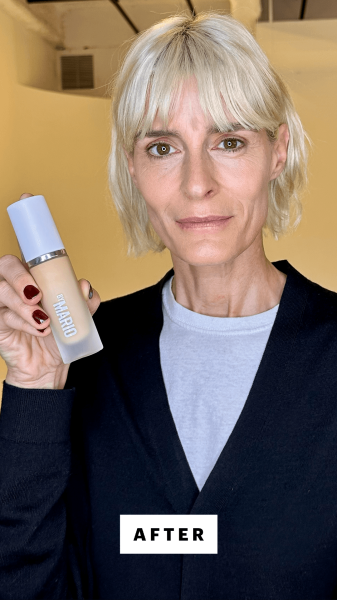
Allure tester after applying the Makeup by Mario SurrealSkin Foundation
Allure
Editor tip
LargeChevron
Even though it leaves a slightly dewy finish, our testers with oily skin found it held up beautifully throughout the day without turning shiny. Want something sheer? Mix a pump with your favorite moisturizer and pat it on with your fingers for a more natural, skin-tint effect.
More to know
LargeChevron
- Key ingredients: glycerin, grapeseed oil, sunflower oil
- Finish: satin
- Shades: 39
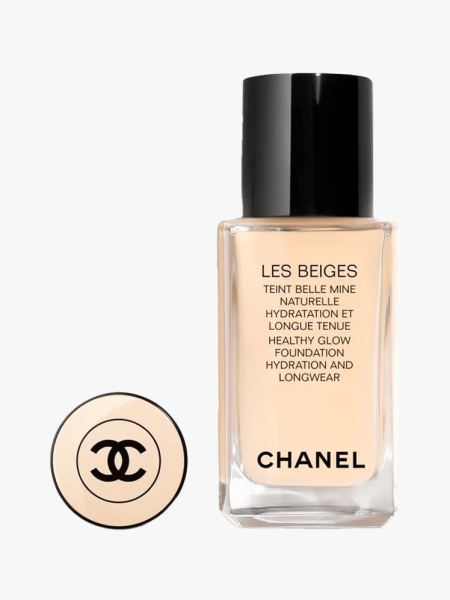
Best for Dry Skin: Chanel Les Beiges Healthy Glow Foundation
 Save to wishlist
Chanel
Les Beiges Healthy Glow Foundation
Chanel
Nordstrom
Ulta Beauty
Why it's worth it: It may be 40% water, but Chanel’s Les Beiges Healthy Glow Foundation is no tinted moisturizer in disguise. The hydrating glycerin-based formula floods skin with moisture, while a mix of lightweight meadowfoam seed oil and silicones keeps the texture cushioned, comfortable, and smooth. “It leaves the skin hydrated and plump, while the radiant finish helps to create a glowy, seamless, and skin-like blend,” says Mehta. “It feels like a lightweight serum but offers light-to-medium, buildable coverage that keeps skin looking fresh and natural.” Aharon agrees, noting that mature skin often leans dry and dull, making a radiant finish ideal. With mica and other soft, light-reflecting pigments as well as a diffusing texture, it’s guaranteed to leave your complexion glowing.
Tester feedback from Allure contributing commerce writer Christa Joanna Lee
LargeChevron
“I’ve always had slightly uneven skin tone, and now that it’s coupled with post-pregnancy melasma, I need more coverage than my usual tinted moisturizer. Les Beiges goes on smooth and creamy, melts in instantly, and evens everything out without looking like I’m wearing makeup. It has that your-skin-but-better vibe, which for me means it’s breathable, lightweight, and with just the right amount of glow.” —Christa Joanna Lee, Allure contributing commerce writer
More to know
LargeChevron
- Key ingredients: glycerin, meadowfoam seed oil, jasmine stem extract, mica
- Finish: radiant
- Coverage: sheer-to-medium
- Shades: 42
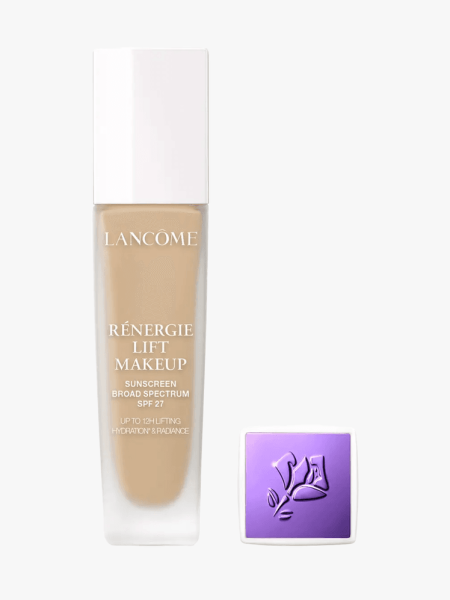
Best Medium Coverage: Lancôme Rénergie Lift Makeup Foundation SPF 27
 Save to wishlist
Lancôme
Rénergie Lift Makeup Foundation SPF 27
Amazon
Nordstrom
Ulta Beauty
Why it's worth it: Lancôme’s Rénergie Lift Makeup Foundation doesn't just happen to work well on mature skin; “this formula feels like it was made with intention for people with fine lines and wrinkles," says Magen Grays, a makeup artist based in Atlanta. Beyond the skin-like finish, the formula is packed with nourishing ingredients like ceramides to support the barrier, soybean oil and sorbitol to replenish moisture, and caffeine to “bring skin back to life,” says Grays. Lightweight silicones further create a “smoothing, blurring effect that doesn’t emphasize uneven skin texture,” she says. “It’s radiant without being heavy, and it moves with your face instead of sitting on top of it.
Editor tip
LargeChevron
The built-in SPF 27 is a welcome bonus, but since it falls just shy of the American Academy of Dermatology's recommended SPF 30 for daily sun protection—and most people don't apply enough foundation to achieve the labeled SPF anyway—it should be considered an extra layer of protection, not a replacement for your dedicated sunscreen.
More to know
LargeChevron
- Key ingredients: caffeine, vitamin E, iris extract
- Finish: natural/radiant
- Coverage: medium
- Shades: 20
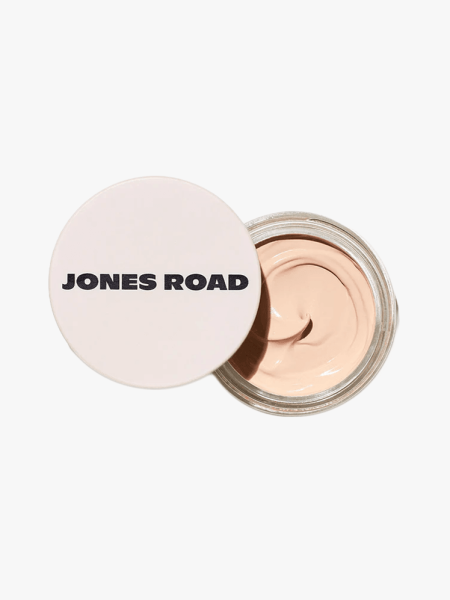
Best Lightweight: Jones Road Beauty What the Foundation
 Save to wishlist
Jones Road
Beauty What the Foundation
Jones Road
Why it's worth it: It makes sense that Bobbi Brown, who helped define the "no-makeup makeup" movement of the '90s—a philosophy that's just as relevant today—would create a foundation that wears more like skin than makeup. Jones Road Beauty's What the Foundation is an ultra-nourishing complexion tint that "blends seamlessly into the skin, leaving you with an even, fresh complexion that looks like your skin on its best day," says Kat Dorn, a makeup artist based in New York City. The lightweight, silky feel comes from jojoba oil, olive oil, and sodium hyaluronate (a form of hyaluronic acid), which keep skin comfortably hydrated throughout the day. If you're looking for full coverage, this isn't it. But if your goal is light to medium coverage that subtly evens your complexion, this formula feels so weightless, you'll forget you're wearing foundation at all.
Editor tip
LargeChevron
Because the formula is rich in nourishing oils, you may notice a little separation over time. If that happens—or if it's applying a bit unevenly—simply give it a quick stir with the back of a makeup brush or a spatula before applying.
More to know
LargeChevron
- Key ingredients: sodium hyaluronate, jojoba oil, olive oil
- Finish: natural/radiant
- Coverage: light to medium
- Shades: 16
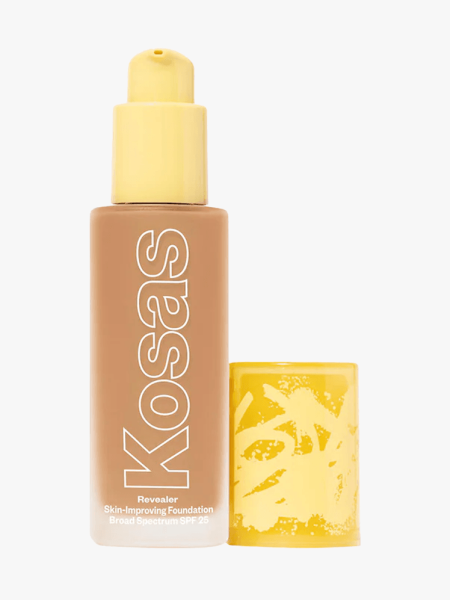
Best for Sensitive Skin: Kosas Revealer Skin-Improving Foundation SPF 25
 Save to wishlist
Kosas
Revealer Skin-Improving Foundation SPF 25
Amazon
Nordstrom
Sephora
Why it's worth it: If you glanced at the ingredient list without seeing the bottle, you'd probably assume it belonged to a moisturizer—not a foundation. When it launched, the Kosas Revealer Skin-Improving Foundation also became something of an unofficial Allure office uniform—there was a stretch where it seemed like every beauty editor was wearing it because of its dewy finish and ultra-creamy texture.
“If you have reactive or sensitive skin, its gentle ingredients enhance your complexion without irritation,” says Grays. The formula is packed with staples like niacinamide, which "works with your skin's natural chemistry to improve overall skin texture by rebuilding a lipid layer, minimizing the appearance of pores, and preventing UV damage and inflammation as an antioxidant," Seattle-based board-certified dermatologist Brandith Irwin, MD, previously said. There’s also everyone’s fave hydrator, hyaluronic acid, to “bind water to collagen, trapping it in the skin, so that skin can appear plumper, dewier, and more hydrated," Beverly Hills-based board-certified dermatologist Tsippora Shainhouse, MD, previously explained.
Editor tip
LargeChevron
The formula is rounded out with barrier-supporting squalane and plumping peptides, so if your mature skin also struggles with dryness, this one checks all the boxes.
More to know
LargeChevron
- Key ingredients: niacinamide, squalane, hyaluronic acid, peptides
- Finish: natural/radiant
- Coverage: medium
- Shades: 36
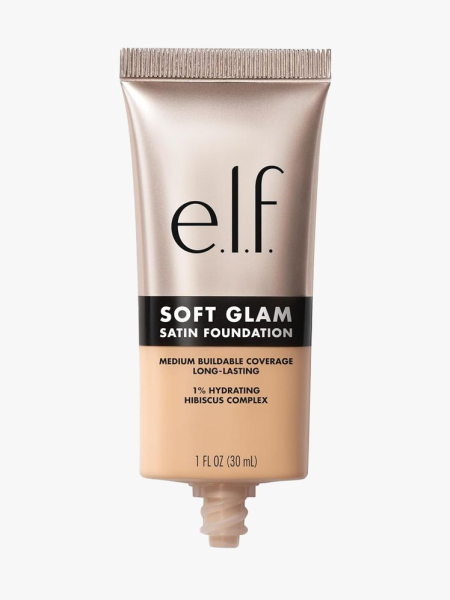
Best Drugstore: e.l.f. Cosmetics Soft Glam Satin Foundation
 Save to wishlist
E.L.F. Cosmetics
Soft Glam Satin Foundation
Amazon
Ulta Beauty
Walmart
Why it's worth it: E.l.f. Cosmetics’ Soft Glam Satin Foundation is "like a superfood smoothie for the face," says Los Angeles-based makeup artist Scott Barnes—and at just $9, it costs about the same as one. The lightweight, breathable formula is infused with the brand's 1% Hydrating Hibiscus Complex, along with antioxidant-rich pomegranate and goji berry extracts to help keep skin hydrated and comfortable throughout the day. It delivers buildable medium coverage with a natural satin finish that strikes the sweet spot for both dry and oily skin. Barnes also loves how seamlessly it blends into skin, and he calls out the slim squeeze tube as a travel-friendly bonus that's easy to toss into a gym bag or carry-on.
Editor tip
LargeChevron
If you're wearing this on a hot, humid day or have oily skin, apply a blurring primer just through the T-zone to help keep shine at bay without sacrificing its natural satin finish.
More to know
LargeChevron
- Key ingredients: 1% Hydrating Hibiscus Complex, pomegranate, goji fruit
- Finish: satin
- Coverage: medium
- Shades: 36
Best Long-Wearing: Nars Natural Radiant Longwear Foundation
 Save to wishlist
Nars
Natural Radiant Longwear Foundation
Nordstrom
Ulta Beauty
Sephora
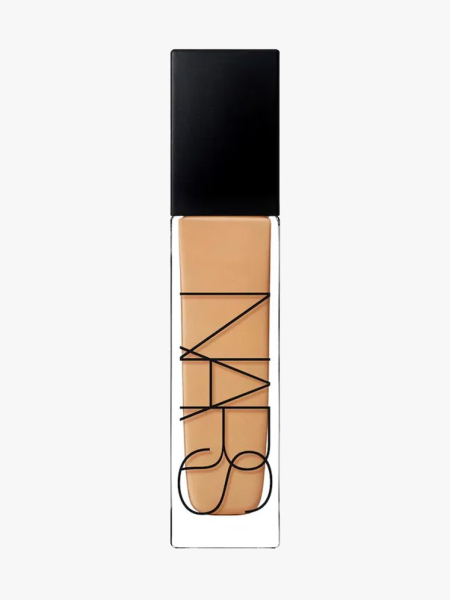
Why it's worth it: “Long-wearing” and “radiant” might sound like an oxymoron when talking about foundations for mature skin, but Nars’s Natural Radiant Longwear Foundation proves they can coexist. The medium-to-full coverage feels surprisingly lightweight and breathable, yet stays put for up to 16 hours without fading, creasing, or clinging to dry patches. Its longevity comes from a pigment system that prevents color from oxidizing and helps it blend with your natural tone rather than sitting on top. Raspberry, apple, and watermelon extracts give the formula a smoothing, hydrating finish. “When someone wants a more polished result but still wants skin to look alive, this is a go-to,” says Renée Loiz, a makeup artist based in Los Angeles. “It holds up exceptionally well and maintains radiance without breaking down or settling into fine lines.”
Editor tip
LargeChevron
This formula already contains humectants like glycerin, sodium PCA, and sodium lactate to maintain hydration throughout the day, so you might want to apply a lightweight gel moisturizer underneath, especially if you have combination or oily skin.
More to know
LargeChevron
- Key ingredients: raspberry, apple, and watermelon extracts
- Finish: radiant
- Coverage: medium-to-full
- Shades: 36
Best Foundation Stick: Westman Atelier Vital Skin Foundation Stick
 Save to wishlist
Westman Atelier
Vital Skin Foundation Stick
Nordstrom
Credo Beauty
Sephora
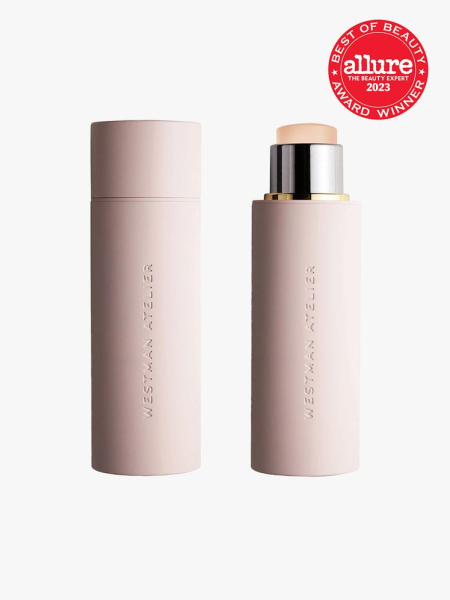
Why it's worth it: Westman Atelier’s Vital Skin Foundation Stick, a 2022 and 2023 Best of Beauty Award winner, has a second-skin-like finish well-suited for mature skin, plus it's loaded with nourishing ingredients like squalane for moisture and phytosphingosine, a naturally occurring lipid found in the skin, to soothe. This cream formula melts into the skin, whether you apply it straight to your face or use a brush. "For radiance and a second-skin finish that doesn't settle into fine lines, I love this formula for mature skin," Aharon says. Due to calming ingredients like squalane and camellia seed oil, Aharon says this fragrance-free foundation is suitable for sensitive skin, regardless of age.
Editor tip
LargeChevron
We also love packing this travel-friendly stick in a shade or two deeper than your complexion to double as a cream bronzer.
More to know
LargeChevron
- Key ingredients: vegetable-derived squalane, berryflux vita extract, camellia seed oil, coconut oil
- Finish: natural
- Coverage: medium
- Shades: 20
Frequently Asked Questions
What to consider when looking for a foundation for mature skin
As you age, your complexion gains texture and leans toward the drier side. New York City-based, board-certified dermatologist Joshua Zeichner, MD, previously told Allure that this is because your skin produces less collagen and fewer natural lipids, such as ceramides and fatty acids, which leads to dehydrated skin and a weaker moisture barrier. When it comes to base makeup, "Fine or not-so-fine lines and larger pores can make foundation look mask-like at best and incredibly unflattering at worst," explains Los Angeles-based makeup artist Fiona Stiles. That's why finding a hydrating foundation is paramount for looking fresh. Tony Tulve, a New York City-based makeup artist, recommends choosing liquid foundations as they "act more like a second skin." Overall, finding a buildable-coverage formula with skin-plumping, fine-line-minimizing ingredients like hyaluronic acid and squalane is the key to a flawless, crease-free base.
How to prep mature skin for foundation
Before you touch your makeup brushes, prepping your skin is essential for creating the smoothest finish possible. "Moisture is key, so always make sure you start with a moisturizer that's hydrating but won't turn greasy and interrupt your foundation texture," Barose previously told Allure. Gucci Westman, a Los Angeles-based makeup artist, also emphasized being vigilant about moisturizing your whole face, especially the area around your eyes. Crystal Gossman, a New York City-based makeup artist, adds that layering on hydrating serums and essence toners will give the skin that juicy, plump feel and a natural tackiness to help foundation grip without needing a primer.
However, if you know you’ll be out and about all day—or have a special event—primer can be helpful for extra long-wearing benefits. Barose recommends blurring formulas and straying away from mattifying formulas. He also gives balm-like formulations (like Danessa Myrick's Yummy Skin Moisture Repair Balm Serum) kudos for conditioning your skin while locking makeup in place. "You also don't need to wear it all over the face,” he explains. “Focus on lines or [other areas] of your face [you want to] blur.”
How to apply foundation on mature skin
Tulve leans into the "less is more" philosophy when applying foundation to mature skin. Denser, full-coverage formulations may end up accentuating fine lines, so use a buildable formula you can layer to your desired finish for a seamless, second-skin-like result. "I apply foundation on the larger areas of the face first, like the cheeks and forehead, then I go in and tweak around the nose and the chin area," New York City-based makeup artist Sandy Linter previously told Allure. “Lastly, I'll apply concealer, plus a touch of foundation under the eye area.”
If you apply your makeup with your fingers, you may want to swap your digits for a makeup sponge or foundation brush to ensure even coverage. "[Using your] fingers can look blotchy, uneven, or gloppy, which can make your lines come out more," Barose said. To buff the foundation in, Barose recommends moving the brush in circular motions. “This will help the foundation spread smoothly, even over hard-to-reach areas with lines and wrinkles,” he notes. To ensure a smooth, blotch-free canvas, you can use a damp sponge as a final step to buff and blend.
Meet the experts
- Lisa Aharon, a makeup artist based in New York City
- Lauren D’Amelio Ventre, a makeup artist based in New York City
- Crystal Gossman, a makeup artist based in New York City
- Magen Grays, a makeup artist based in Atlanta
- Brandith Irwin, MD, a board-certified dermatologist based in Seattle
- Sandy Linter, a makeup artist based in New York City
- Renée Loiz, a makeup artist and founder of Color May Vary, based in Los Angeles
- Amrita Mehta, a bicoastal makeup artist
- Beau Nelson, a makeup artist based in Los Angeles
- Tsippora Shainhouse, MD, a board-certified dermatologist based in Beverly Hills, California
- Fiona Stiles, a makeup artist based in Los Angeles
- Tony Tulve, a makeup artist based in New York City
- Gucci Westman, a makeup artist and founder of Westman Atelier, based in Los Angeles
- Joshua Zeichner, MD, a board-certified dermatologist based in New York City
How we test and review products
Before reviewing any makeup, we ask questions about a number of factors: What ingredients are in it? Does the brand offer a wide shade range that includes consumers with all skin tones and undertones? Is it safe for readers who have sensitive skin or wear contact lenses? Is it on the affordable side or more of a splurge? Is its packaging consciously designed or needlessly wasteful?
For our review of the best foundations for mature skin, we enlisted the help of multiple editors, writers, and contributors, with a particular focus on our 40-plus reviewers. We also relied heavily on trusted makeup artists to speak to the efficacy of these products on mature skin. This ensures our testing base spans different skin tones, genders, and dermatological conditions. We considered each product's performance across four primary categories: ingredients, wear and longevity, packaging, and inclusivity. For more on what's involved in our reporting, check out our complete review process and methodology page.
Our staff and testers
A beauty product is a personal purchase. You might be searching for a face cream to address persistent dryness or a new nail product to add to your Sunday self-care routine. You may simply be browsing for the latest launches to hit the hair market. No matter what you seek or your individual needs and concerns, Allure wants to ensure that you love anything we recommend in our stories. We believe that having a diverse team of writers and editors—in addition to the wide range of outside testers and industry experts we regularly call upon—is essential to reaching that goal.
After all, can we really say a skin-care product is the "best" for people over 50 if the only testers we’ve solicited opinions from are folks who have yet to hit 30? Can we honestly deem a high-end diffuser worthy of your hard-earned cash if it’s never been tested on curls? We’re proud that our staff spans a wide range of ages, skin tones, hair textures, genders, and backgrounds, which means that we are able to fairly assess any beauty product that comes into the beauty closet.
11 Common Skin Conditions on Dark Skin and How to Treat Them
 Illustration by Mark Baker-Sanchez; Photos courtesy of AAD; Adobe StockSave this storySave this story
Have you ever noticed an unusual bump, spot, or scar on your skin and run it by a search engine, only to be met with a bunch of pictures that don't match your skin tone? Many Black and brown folks know this experience all too well. Often, the lack of representation of skin conditions on our complexions can leave us feeling even more confused as we try to figure out what's going on.
There's an array of conditions that affect every skin tone, but many of these look different on melanated skin than on white skin. A handful of these issues also affect Black and brown skin disproportionately. A 2025 medical article from the Journal of the European Academy of Dermatology and Venereology states that “conditions like post-inflammatory hyperpigmentation and melasma are more prevalent and often more severe in individuals with skin of color.”
This is even more reason why darker skin in all its glory should receive the care and attention it deserves in dermatology. In 2004, Susan C. Taylor, MD, a board-certified dermatologist in Philadelphia, established the Skin of Color Society, an organization committed to educating providers and the general public on dermatologic health related to skin of color. Dr. Taylor notes that as the nation's population becomes more ethnically diverse, the dermatological community will continue to see and treat skin conditions that occur more often, present differently, or are unique to Black people and other people of color.
"Since [establishing the Skin of Color Society], we have made terrific inroads in terms of understanding skin of color a little bit better and prioritizing skin of color," says Dr. Taylor, adding that the collective endeavor has led to lectures and conferences centered around melanated skin and more representation in mainstream dermatology textbooks.
To further increase awareness and resources around caring for skin of color, we've created a guide to the most common conditions for those with darker skin, breaking down exactly what you need to know to identify and treat them.
Find Your Skin Concern
Click to jump to a specific condition:
- Post-inflammatory hyperpigmentation
- Melasma
- Keloids
- Dermatosis papulosa nigra
- Pseudofolliculitis barbae
- Traction alopecia
- Central centrifugal cicatricial alopecia
- Seborrheic dermatitis
- Acanthosis nigricans
- Vitiligo
- Acral lentiginous melanoma
What is melanin and how does it affect skin health?
Before we talk about how to properly treat melanin-rich skin, it's important to know exactly what melanin is. Melanin is the pigment that causes your skin color. There are two types of melanin: eumelanin (brown pigment) and pheomelanin (yellow pigment).
A quick search of the hashtags #melanin and #melaninqueen on Instagram validates that the term "melanin-rich skin" has become mostly associated with darker skin tones. But Jenna Lester, MD, a board-certified dermatologist in San Francisco, says most people have some sort of balance of the two types of melanin.
Depending on a person's skin color, they may have more of one type than the other. In general, eumelanin is more prevalent in people with darker skin. "So it's not that people with dark skin have more melanin; they just have more of a different type of melanin," says Dr. Lester.
Melanin is produced in cells called melanocytes, which are present in the lower layer of the skin, says Dr. Taylor. After making melanin, the melanocytes put it into packages called melanosomes, which are then transferred into the skin cells. In addition to providing pigmentation, melanin also serves as a protective agent. For example, eumelanin protects you to some extent from burning when exposed to the sun, says Dr. Taylor.
Why skin conditions can look different on dark skin
Since Black and brown skin has more eumelanin, certain skin conditions may present differently on darker skin tones than on lighter complexions. Take post-acne marks, for example. They might appear as post-inflammatory erythema [redness] on fairer skin, while they “look more brown [on dark skin] or even more purplish,” explains Esther Henebeng, MD, a board-certified dermatologist with U.S. Dermatology Partners Fairfax. “So if the photo that you're seeing online is a stock photo on white skin, but when you look in the mirror, and you see Black skin, you might not identify the issue.”
Common skin conditions on dark skin (at a glance)
| Condition | How it appears on dark skin | When to see a dermatologist |
|---|---|---|
| Post-inflammatory hyperpigmentation | Dark spots of varying sizes and on different areas of the skin where injury has occurred. | If spots persist for months without progress or cause distress. |
| Melasma | Darker patches of skin, commonly seen on the upper lips and cheeks. | If patches worsen or cause distress. |
| Vitiligo | Patches of skin that are lighter than the pigment all over the body. | If patches spread or cause distress. |
| Keloids | A thick, dense, hard lump on the skin that can range in size. | When scars are painful, itchy, or increase in size. |
| Dermatosis papulosa nigra | Small, flat, brown to black lesions that slowly become larger in size with time. | If lesions change, bleed, become inflamed, or affect confidence. |
| Traction alopecia | Hair loss and thinning, accompanied by scalp tenderness, pain, and pimple-like bumps in the areas of highest tension—typically the hairline. | If you experience scalp sensitivity or see hair loss or thinning. |
| Central centrifugal cicatricial alopecia, (CCCA) | Hair loss at the crown of the head that spreads outward. | At the first signs of hair loss, early diagnosis helps prevent further loss. |
| Pseudofolliculitis barbae | Small pimples that can also be paired with ingrown hairs. Depending on the severity, they can occur in rash-like clusters and can cause irritation and itching. | If bumps are recurrent, painful, or irritated. |
| Acral lentiginous melanoma | Dark brown or black spots or streaks on the palms, soles, or under the nail bed. | If the spots or streaks change in color or size, or if you notice a new or irregular mark. |
| Acanthosis nigricans | Dark, velvety, or thickened skin often on the neck, armpits, groin, or knuckles. | Immediately, to rule out underlying conditions like insulin resistance. |
| Seborrheic Dermatitis | Dark or hypo-pigmented patches with flaky scales, often on the scalp, eyebrows, nose, and ears. | If the condition is severe, persistent, itchy, or causes hair loss. |
Pigmentation conditions
Post-inflammatory hyperpigmentation
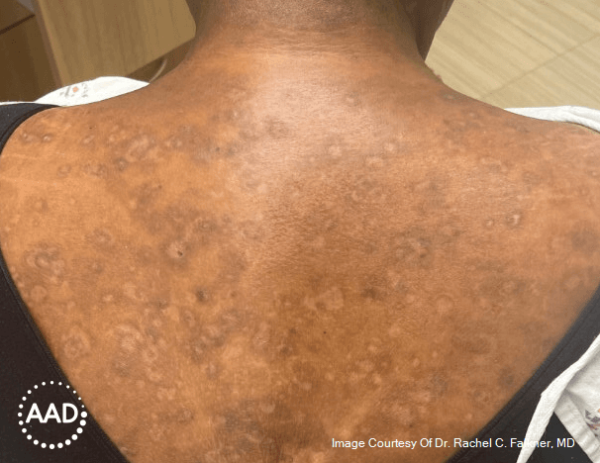 Courtesy of Dr. Rachel C. Falkner
Post-inflammatory hyperpigmentation (PIH) is a result of injury to the skin, such as acne, burns, insect bites, or any other damage. Because skin of color has more brown pigment, there is more of a chance for PIH, says Michelle Henry, MD, a board-certified dermatologist in New York City.
“Those little melanosomes are full of pigments, and they’re so full that they’re almost bursting,” says Dr. Henry. “So that means anything can bump them and cause them to leak.” Leakage of that dark-colored pigment results in hyperpigmentation (which is, essentially, more color) in the affected area. Cue those dark marks or spots left behind after a pimple.
Signs and symptoms: On dark skin, PIH can range from small dark spots in concentrated areas of the skin to wider areas of discoloration. Dr. Henebeng says an easy way to distinguish PIH from other pigmentation conditions like melasma or vitiligo is to look at where the spots appear. “Wherever you get the pimple, [PIH] will usually be there, so you'll have that correlation that something happened to the skin in that spot or area,” says Dr. Henebeng, who adds that PIH does fade over time, whereas with melasma and vitiligo “regardless of what you do, it often does stick around."
How to treat it: When it comes to the treatment of hyperpigmentation, Uchenna Okereke, MD, a board-certified dermatologist in Massachusetts, says studies have shown sunscreen use alone can help significantly reduce the appearance of dark marks on skin of color. “Consistent use of sunscreen is really the first step in treating hyperpigmentation,” says Dr. Okereke. “Sunscreens with physical blockers like zinc oxide and titanium dioxide help block harmful UV rays from the sun, which will prevent worsening of dark marks.”
Several ingredients can help improve hyperpigmentation, including glycolic acid, cystamine, kojic acid, azelaic acid, and alpha-arbutin. Dr. Okereke advises seeing your board-certified dermatologist to help identify which are best for you.
Many times, there are over-the-counter options to help treat discoloration due to hyperpigmentation. We like the Topicals Faded Brightening & Clearing Gel, which is made with kojic acid and licorice root, as well as the Allure Best of Beauty Award-winning CeraVe Resurfacing Retinol Serum, formulated with niacinamide and retinol.
 Save to wishlist
Topicals
Faded Brightening & Clearing Gel
Amazon
Sephora
 Save to wishlist
CeraVe
Resurfacing Retinol Serum
Amazon
Dermstore
Ulta Beauty
Melasma
“Melasma is a pigmentary disorder that appears as lacy, [meshed] patches,” Corey L. Hartman, MD, a board-certified dermatologist, previously told Allure. In the case of someone diagnosed with melasma, "those pigment-producing cells are stimulated to create more pigment, resulting in darker discoloration, says Dr. Lester.
Melasma is also referred to as “the mask of pregnancy.” That's because it's sometimes linked to hormones that surge or plummet during periods like pregnancy, says Dr. Henry. “We see it with pregnancy; we see it post-menopause; any of these hormonal changes can cause it [melasma],” she says.
But melasma isn't isolated to periods of hormonal shift, Dr. Henry notes. She's seen people with the skin condition at all stages of life. Dr. Henebeng points to genetics as another possible cause of melasma. “So if Mom had it, you might have it,” says Dr. Henebeng.
Signs and symptoms: Melasma presents as darkened patches on the skin, typically on the forehead, cheeks, and upper lip. Dr. Henebeng says these locations on the face are one way you can distinguish melasma from other pigmentation conditions, though it's always best to see a dermatologist to confirm your condition.
How to treat it: Dr. Henry says that the patches and blotches sometimes go away on their own, or they can stick around longer. If your melasma doesn't resolve itself, there are a few treatment options.
Sunscreen is foundational to the treatment of melasma, says Dr. Taylor. “People with melasma want to block out [UVA and UVB light] and visible light,” she explains. “Those three wavelengths of light can worsen melasma, make it darker, and prevent medications from being as effective as they can be.”
She notes that in addition to sun protection, lightening products may also be used. A prescription topical medication Dr. Taylor recommends is Tri-Luma, which contains hydroquinone (4%), tretinoin (.05%), and the corticosteroid fluocinolone acetonide (.01%). "Those three ingredients together have been demonstrated to be superior in lightening melasma as compared to a combination of any two of those ingredients paired together," she notes.
Some dermatologists also recommend SkinCeuticals Discoloration Defense Serum, which is formulated with kojic acid, tranexamic acid, and niacinamide. We also like the niacinamide- and pro-retinol-laced Melé Even Dark Spot Control Serum as an under-$25 option. Chemical peels can also be integrated into treatment to lighten the pigmentation of melasma, Dr. Taylor says.
 Save to wishlist
SkinCeuticals
Discoloration Defense Serum
Skinceuticals
Dermstore
Bluemercury
 Save to wishlist
Melē
Even Dark Spot Control Serum
Amazon
Vitiligo
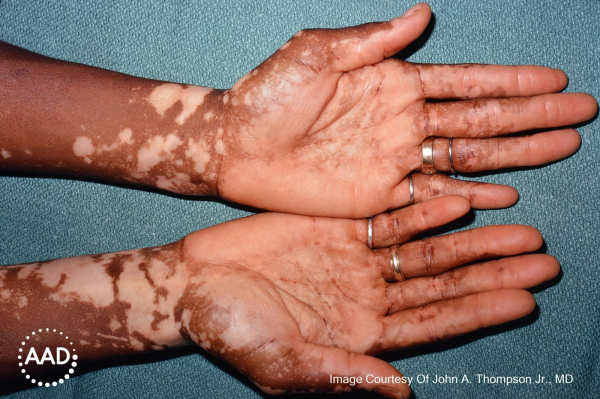 Courtesy of Dr. John A. Thompson Jr.
Vitiligo is a condition that causes the skin to lose its natural pigment. It's an autoimmune condition, which means your body is producing inflammatory T-cells that attack the melanocytes (the cells that produce pigment), explains Yolanda Lenzy, MD, a board-certified dermatologist in Chicopee, Massachusetts.
It's unclear exactly what causes vitiligo, but doctors believe there is a genetic susceptibility combined with an autoimmune condition, like lupus or thyroid disease, that mistakenly attacks the melanocytes, says Hope Mitchell, a board-certified dermatologist in Ohio. It can occur in people of any race, age, ethnicity, or gender, and it is neither contagious nor life-threatening.
On white skin, the lighter patches may blend in with the person's complexion, but the loss in pigmentation is very noticeable in people with darker skin. “Because vitiligo affects a person's physical appearance, the psychosocial burden may be significant,” Dr. Mitchell explains, adding that varying levels of emotional distress and stigmatization may occur.
Signs and symptoms: With vitiligo, you'll notice white (or lighter pigment) patches of skin on different parts of the face and body. “It can pretty much happen anywhere on the body,” says Dr. Lenzy, and these patches don't resolve on their own.
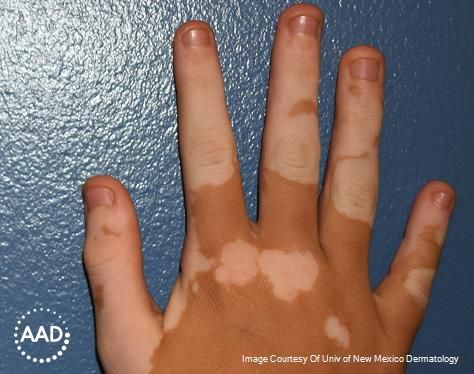 Courtesy of University of New Mexico Dermatology
How to treat it: Treatment begins with correcting any underlying autoimmune conditions, says Dr. Mitchell. Options to promote re-pigmentation are available and have proven to be effective, says Dr. Lenzy, who has found success using tacrolimus ointment, a nonsteroidal anti-inflammatory agent. Opzelura (ruxolitinib 1.5%), a steroid-free JAK inhibitor cream, is another topical prescription that Dr. Henebeng recommends to her patients.
Sun protection is essential for people who have vitiligo because the loss of melanin will cause them to burn more easily. Dr. Mitchell also recommends that patients try to avoid and limit stress, as both can “start a cascade of inflammation that can attack the melanocytes, causing pigment loss.”
Phototherapy, where exposure to light sources is used to treat certain medical conditions, is also a treatment option for vitiligo, says Dr. Mitchell. Also known as light therapy, the treatment is done at your doctor's office on a set schedule over a period of months to see improvement.
Scarring and growth conditions
Keloids
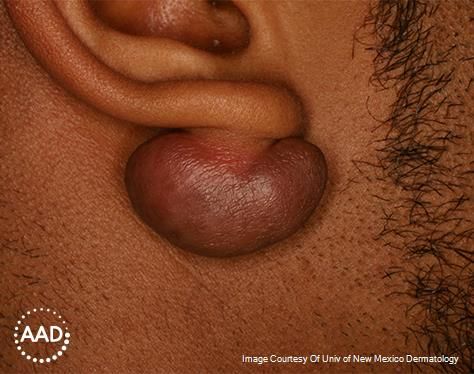 Courtesy of University of New Mexico Dermatology
Keloids are an overgrowth of scar tissue. They present as a thick, dense, hard lump on the skin that can range in size. Clinically, Dr. Lester has seen patients develop a keloidal scar after having their ears pierced, as a result of a surgical incision or an acne lesion, or after another injury to the skin.
“Keloids are most common in our patients with skin of color,” says Elizabeth Kiracofe, MD, a board-certified dermatologist in Chicago. “And those of African descent are at the highest risk for the development of keloids,” says Dr. Kiracofe. Reports of familial cases suggest a genetic contribution to the development of keloidal scars. “When it does occur in families, it does so in an autosomal-dominant fashion, meaning that half of the family is at risk,” she adds.
Signs and symptoms: The growth of a keloid scar usually originates with an injury to the skin, like a C-section scar. It can sometimes be marked with itching or pain, or both. And, depending on the size and location of the scar, it can carry aesthetic concerns or discomfort with movement.
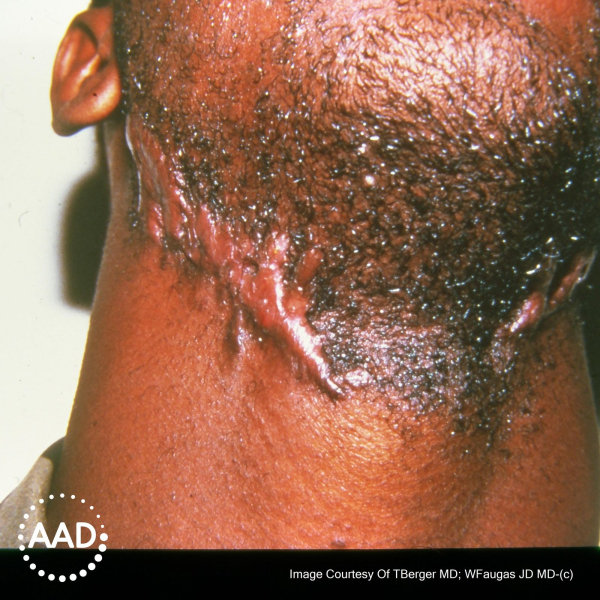 Courtesy of TBerger MD; WFaugas JD MD-(c)
How to treat it: While no one treatment is 100% effective at preventing the recurrence of keloids, Dr. Kiracofe stresses that keloids are treatable. Treatment options include steroid injections into the keloid, surgical removal, and laser therapy, among others. Dr. Henebeng adds that cryotherapy (using a cold spray to freeze the keloid) can also work. “We use a very, very cold spray on the lesion,” says Dr. Henebeng. “What ends up happening is that it's so cold that it burns a little bit. The whole area turns white, and they might do that for a few passes. Over time, you'll see it shrink.”
Depending upon the case, your dermatologist may recommend more than one treatment at a time. Dr. Henebeng explains that steroid injections or creams are typically used after surgical removal.
Dermatosis papulosa nigra
Dermatosis papulosa nigra (DPN) is a condition where benign growths resembling moles or freckles grow on the cheeks and around the eyes. They are known colloquially as “Morgan Freeman spots,” as the raised growths on the actor's face have become more prominent during his decades-long career.
Signs and symptoms: DPN may sound similar to skin tags, but Dr. Henry points out that they differ in morphology and location. “DPN lesions are flat-topped or minimally elevated, darkly pigmented, and clustered symmetrically on the face,” she says. “Skin tags are soft, flesh colored, and hang from a visible stalk. They tend to occur in skin folds and friction areas rather than the face”
Many patients report a family history of DPN. This may suggest that there is a genetic predisposition to developing the papules. DPN is not dangerous and doesn't require treatment, though some people opt to have the growths removed for cosmetic reasons.
How to treat it: The removal procedure is called electrodesiccation. DiAnne Davis, MD, a board-certified dermatologist in Dallas, explains that topical lidocaine is used to numb the skin before the procedure. Next, a needle-shaped electrode is used at a very low setting to “dry up the tissue” using a high-frequency electric current.
“After the procedure, the lesions will turn darker for a couple of days and slowly fall off,” says Dr. Davis. Removal is permanent, she adds, but patients can develop new growths in other places, like the neck and chest.
Hair and scalp conditions
Pseudofolliculitis barbae
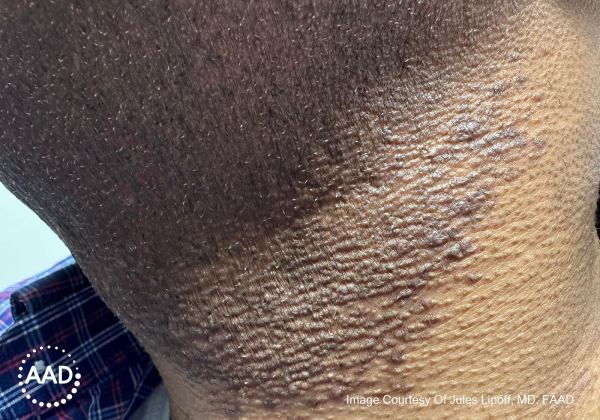 Courtesy of Jules Lipoff, MD, FAAD
Pseudofolliculitis barbae (PFB), also known as razor bumps, is an inflammatory condition of the skin caused by a hair-removal process, like shaving.
PFB is seen more frequently in skin of color as a consequence of the shape of the hair follicle, says Dr. Henry. For Black people, the follicles tend to be curved instead of straight, and that encourages the hair to curl back toward the skin. “Black, curly hair may start to curl while it's growing, even before it exits the follicle, or it may curl right after exiting the follicle,” Dr. Henry explains. “And so now you've cut the hair, and it's growing out, and it's going to pierce the skin, come back in, and create an ingrown hair.”
Barbae is Latin for beards, so people tend to associate PFB with Black men because of their facial hair, says Dr. Lester. But she also sees PFB in women of color who have hair growth on the face, in the groin, or in the bikini area.
Signs and symptoms: PFB is fairly easy to identify since it shows up on areas of the skin where you shave or wax. On dark skin, razor bumps look like small pimples and can also be paired with ingrown hairs. Depending on the severity, they can occur in rash-like clusters and can cause irritation and itching.
How to treat it: For a more delicate zone like the bikini area, Dr. Lester recommends shaving in the direction of the hair growth instead of against it and using a sharp, multi-blade razor. She also recommends depilatory hair removal creams, like Nair or similar products, but warns that you need to be vigilant to ensure it doesn't get into any sensitive areas down below.
Serums that contain chemical exfoliators like glycolic or salicylic acid may also help with the appearance of razor bumps, especially when they're accompanied by ingrown hairs. “These exfoliators dissolve connections between cells on the surface of the skin to prevent hairs from becoming trapped,” Joshua Zeichner, MD, a board-certified dermatologist in New York City, previously told Allure.
Geeta Yadav, MD, a board-certified dermatologist and the founder of Facet Dermatology in Toronto, recommends Kiehl’s Ingrown Hair & Tone-Correcting Intimate Drops. “This formula contains a blend of three alpha-hydroxy acids (lactic, glycolic, and mandelic) as well as salicylic acid, which help address ingrown hairs by exfoliating skin at the surface and within the follicle,” Dr. Yadav previously told Allure. We love the Fur Ingrown Eliminator Serum, which has salicylic acid as well as aloe to soothe any irritation caused by the bumps.
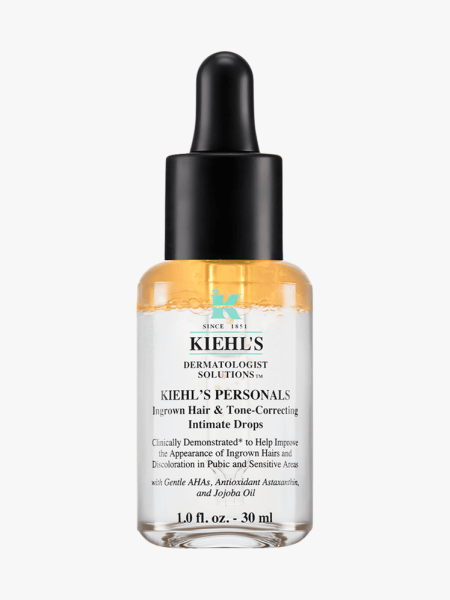 Save to wishlist
Kiehl's
Ingrown Hair and Tone-Correcting Intimate Drops
Amazon
Nordstrom
Ulta Beauty
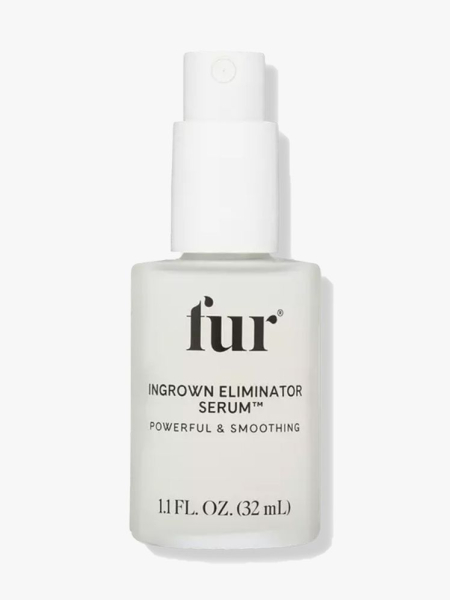 Save to wishlist
Fur
Ingrown Eliminator Serum
Amazon
Dermstore
Revolve
Traction alopecia
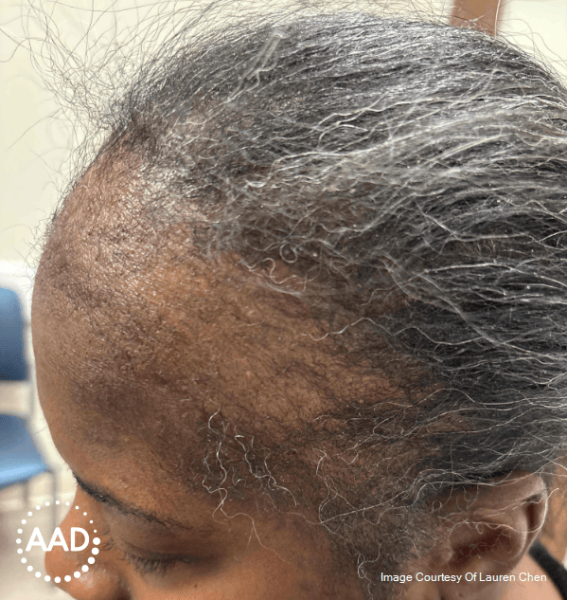 Courtesy of Lauren Chen
Constant pulling on the hair in styles like braids, weaves, cornrows, and tight ponytails can lead to long-standing trauma and then hair loss, known as traction alopecia, explains Dr. Henry. It's important to note that high-tension hairstyles cause hair loss in both natural and chemically relaxed hair, she adds.
Signs and symptoms: In addition to hair loss and thinning, traction alopecia symptoms include scalp tenderness and pain, and pimple-like bumps in the areas of highest tension. You'll know that you're dealing with traction alopecia versus another condition like centrifugal cicatricial alopecia (CCCA) based on where you're noticing the symptoms, says Dr. Henebeng. Traction alopecia typically starts at the hairline (as this is where the most tension from protective styles occurs), but in certain cases it can begin on other parts of the head where the most tension is applied.
How to treat it: In cases of traction alopecia, because the hair loss follows where there's tension on the scalp, stopping whatever process is causing that stress is key, says Dr. Lenzy. “I recommend that patients rotate their hairstyles,” she explains. “So if you had braids in for four to six weeks, you need to wear your hair out for at least that [same] length of time to give it a break from the tension and the weight.”
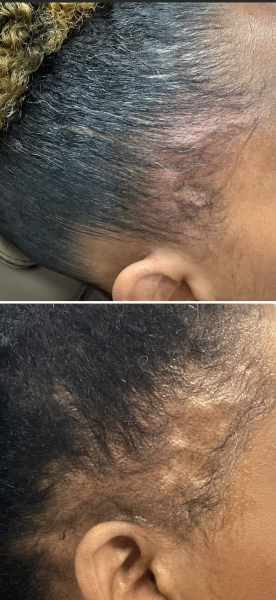 Courtesy of Trayam Dermatology
The second step in treatment for traction alopecia is to target the inflammation, says Dr. Lenzy. With a hand-held dermatoscope (a tool that helps magnify the area it hovers over), she is able to look at her patients' hair follicles to see indicators of the condition. “I can see redness and small bumps called pustules, like little pus-filled bumps, around the follicles,” she says. “And that's a sign that those follicles are under a lot of stress.”
To decrease inflammation, you might receive topical anti-inflammatories, like cortisones. Dr. Henry says intralesional steroid injections can also help. “They can provide deeper anti-inflammatory penetration and are a standard treatment for active traction alopecia.”
Both doctors suggest a low dose of minoxidil, depending on the severity of the case. Minoxidil "helps those residual hairs to thicken,” Dr. Lenzy says. “Because a lot of times, the hairs that are left are very, very thin and fragile.” Dr. Henry adds that this is an option for someone who might have difficulty keeping up with topical formulations.
Dr. Henry also offers platelet-rich plasma (PRP). “While evidence is limited to case reports and small series for scarring/traction alopecias, PRP has shown promise in slowing disease progression and reducing inflammation,” she says.
Central centrifugal cicatricial alopecia
Hair loss at the crown of the head that spreads outward is known as central centrifugal cicatricial alopecia, or CCCA. The exact cause of CCCA is unknown. While certain hair-care practices and hairstyles (like high puffs and tight ponytails) have been said to trigger scarring in the crown area that leads to hair loss, there seems to be more to the cause of the condition than just how to style your hair.
A lot more research is being conducted to try and pinpoint why CCCA happens, says Dr. Lester. “There are people who've always used low-tension hairstyles and have never used chemicals or anything like that who also get it,” she says. “So it's not just about hairstyling.”
Cicatricial comes from the Latin word for scar, and CCCA is the most common form of scarring hair loss in Black women, as noted by multiple dermatologists on our expert panel. Inflammatory cells, such as lymphocytes, lead to the destruction of the hair follicle, explains Dr. Lenzy.
How to treat it: Proper diagnosis precedes treatment. In her practice, Dr. Lenzy performs a biopsy to properly diagnose the condition, which can often be mistaken for other forms of alopecia. Using a microscope, a pathologist can see the inflammatory cells. In a case of CCCA, “the hair follicle becomes replaced with scar tissue,” she says. “So if we look at it under the [dermatoscope] we no longer see the hair follicles. We see scar tissue.”
Areas that are scarred in this way generally do not grow back, Dr. Lenzy adds. Some people, however, will have hairs that have “stunted growth,” she notes, which dermatologists can encourage to grow back by controlling the inflammation and adding in other treatment options.
This is why the early and accurate diagnosis of CCCA is so important, says Dr. Lenzy, adding that she also tends to treat CCCA more aggressively than other forms of hair loss. “I have found that when it's not treated aggressively enough, it tends to progress faster,” she says. "So I use things like oral antibiotics, not because it's an infection, but because the antibiotics are anti-inflammatory."
Dr. Lenzy also uses some of the same treatments for traction alopecia to treat CCCA, like topical corticosteroids compounded with minoxidil. And she sometimes opts for steroid injections for deeper penetration into the scalp and nutraceuticals to help with the growth and thickness of the residual hairs.
Dr. Henry's other options include low-dose oral or topical metformin. “This is arguably the most significant emerging therapy,” she says. “A 2024 case series in JAMA Dermatology found [positive results] among 12 patients with treatment-refractory CCCA treated with metformin 500 mg daily.” And for more severe cases, oral tofacitinib and adalimumab (targeted therapies for autoimmune and inflammatory conditions) can be prescribed.
Treatment for CCCA is often a months-long, complex process, Dr. Lenzy says. She recommends that patients seek out a board-certified dermatologist, preferably one who specializes in hair loss.
Seborrheic dermatitis
Seborrheic dermatitis is the inflammation of skin caused by an overgrowth of Malassezia, a yeast naturally present on the skin, explains Nina Desai, MD, a board-certified dermatologist in Manhattan Beach, California.
Dr. Henebeng says she sees seborrheic dermatitis very commonly in Black women. “Some of my Black female patients don't wash their hair as frequently when they wear braids and such, so it causes an overgrowth of yeast,” she says.
Other factors like stress, high temperatures, and harsh detergents and soaps can also cause seborrheic dermatitis.
Signs and symptoms: It can appear as dandruff for many. “Dandruff and seborrheic dermatitis exist on the same disease spectrum,” says Dr. Henry. “Dandruff is characterized by mild scaling of the scalp without visible inflammation. Seborrheic dermatitis presents as red patches with greasy scales affecting sebaceous-rich (oily) areas.”
She adds that seborrheic dermatitis doesn't just appear on the scalp. It can also manifest on the face (nasolabial folds, eyebrows), upper chest, and back. It can also be accompanied by scaliness, redness, or greasy patches on your skin.
How to treat it: For seborrheic dermatitis on the scalp, derms point to anti-yeast or antifungal medications like ciclopirox or ketoconazole shampoo as the first step in treatment. Your dermatologist can prescribe one at your appointment, or you can purchase one over the counter (though dermatologists warn against using an OTC and a prescription shampoo at the same time, as this can dry out your scalp). “I usually tell my patients to wash their scalp with the prescription shampoo two to three times a week, leave the shampoo in for 5 to 10 minutes, and then follow it with their regular shampoo and conditioner,” Dina Elrashidy, MD, a board-certified dermatologist in Chicago, previously told Allure.
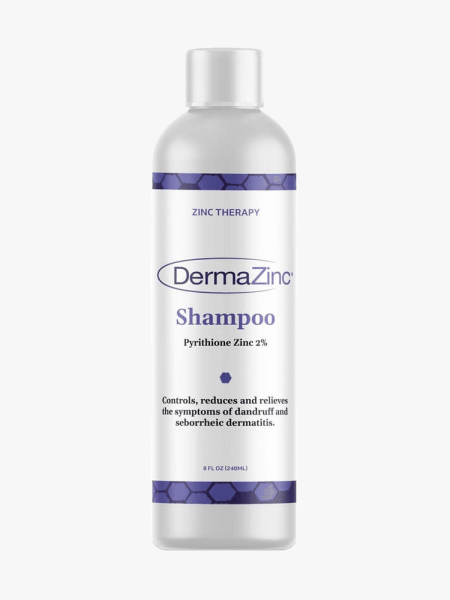 Save to wishlist
DermaZinc
DermaZinc Shampoo
DermaZinc
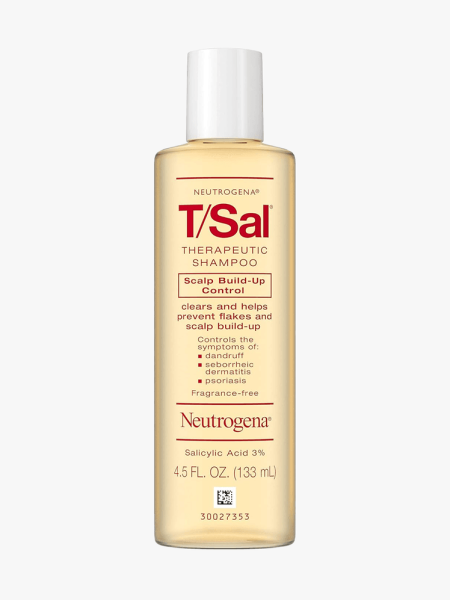 Save to wishlist
Neutrogena
T/Sal Therapeutic Shampoo
Amazon
Walmart
When shopping for over-the-counter shampoos, look for antifungal ingredients like zinc pyrithione and selenium sulfide to combat yeast overgrowth. Dr. Elrashidy recommends DermaZinc Shampoo, which contains zinc pyrithione. Exfoliating ingredients like salicylic acid can also help remove scales, as a secondary treatment, says Mona Gohara, MD, a board-certified dermatologist in New York City, who recommends Neutrogena T/Sal Scalp Build-Up Control Therapeutic Shampoo that contains 3% salicylic acid and relieves flaking without irritation.
Conditions that may signal underlying health concerns
Acanthosis nigricans
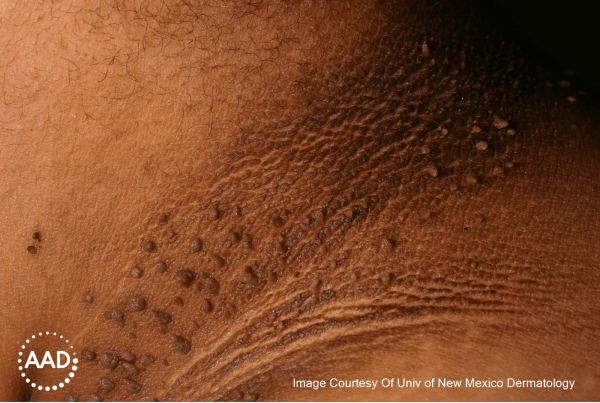 Courtesy of University of New Mexico Dermatology
Acanthosis nigricans (AN) is a skin condition characterized by “velvety,” darker, and thicker patches, says Dr. Mitchell. It is most commonly found in the armpit, groin, or neck folds and creases, where skin lines become deeper and more noticeable.
AN is much more common in people with darker skin pigmentation, Dr. Mitchell says, though research hasn't pinpointed why exactly that is. She has found the discoloration and change in skin texture due to AN to be quite distressing for her patients of color. “Some people believe the skin is dirty or tainted with a product that has discolored the skin,” she says. “During an evaluation [for AN], people may report scrubbing the skin because, for example, they believe they have a dirty neck.”
The presence of acanthosis nigricans may represent an underlying health condition and has been associated with obesity, insulin resistance, pre-diabetes, diabetes, thyroid disease, or polycystic ovary syndrome (PCOS), notes Dr. Mitchell. If this is the case, your doctor may address those underlying health concerns first, which may help improve the skin discoloration.
Signs and symptoms: In addition to the textured, dark patches, acanthosis nigricans may include itching and odor and can also be accompanied by skin tags.
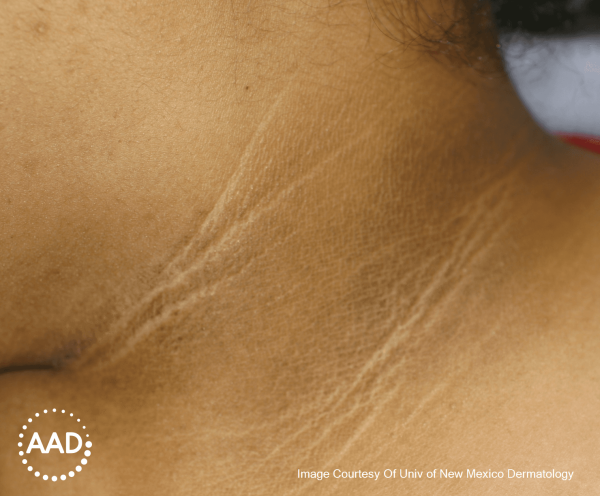 Courtesy of University of New Mexico Dermatology
How to treat it: The treatment of AN is multifaceted, “partly because there can be more than one cause of the condition,” says Dr. Mitchell. One way she treats the condition is with clindamycin (a prescription antibiotic) and antibacterial cleansers applied directly to the area to decrease any odor from secondary infection in the folds. Topical or oral retinoids may also aid in thinning the areas that are thicker than the surrounding skin, she says. And creams with exfoliating and lightening properties may work as well. Some of Dr. Mitchell's favorite ingredients to treat AN include salicylic acid, retinoids, glycolic acid, lactic acid, and hydroquinone.
We recommend Drunk Elephant T.L.C Framboos Glycolic Night Serum, a glycolic and lactic acid-based treatment, and La Roche-Posay Glycolic B5 10% Pure Glycolic Acid Serum, a drugstore serum that has glycolic acid as well as tranexamic acid.
 Save to wishlist
Drunk Elephant
T.L.C. Framboos Glycolic Night Serum
Amazon
Ulta Beauty
Sephora
 Save to wishlist
La Roche-Posay
La Roche-Posay Glycolic B5 10% Pure Glycolic Acid Serum
Amazon
Ulta Beauty
Skin cancer
Acral lentiginous melanoma
People with darker skin are more likely to get skin cancer in areas that are typically protected from the sun, such as the palms, soles of the feet, or under the nails, says Dr. Lester. This is called acral lentiginous melanoma,
Signs and symptoms: This form of skin cancer can begin as a patch of discolored skin or a dark streak on the nails. Despite it occurring less commonly, Black people diagnosed with melanoma have poorer survival rates than white people, according to a 2019 study by researchers at the Centers for Disease Control and Prevention (CDC) and the American Cancer Society. That's why it's important for people of color to keep an eye on those areas. And if they see a new dark spot or streak appear or a dark spot growing in size, Dr. Lester encourages them to go to their dermatologist to determine if there's cause for concern.
How to treat it: The treatments for acral lentiginous melanoma can vary depending on the severity of the cancer, but one early treatment method is surgical removal of the mole, though further monitoring is always required to ensure that the cancer has not spread or doesn't return. Radiation and immunotherapy are other treatments.
FAQs About Skin Conditions on Black and brown Skin
LargeChevronWhat skin conditions are most common on dark skin?
A 2025 study showed that “disorders of pigmentation are among the leading dermatologic concerns in populations with darker skin tones.” This includes melasma, post-inflammatory hyperpigmentation, and vitiligo.
How to find a dermatologist specializing in skin color?
While you may be tempted to look for a dermatologist who shares your skin color (which is totally understandable), it's more important to seek out a doctor who specializes in the condition you may be dealing with. Sites like ZocDoc allow you to filter by condition.
Asking friends and family who have or have had the condition you're dealing with for dermatologist recommendations is also a good place to start. If you're very keen on seeing a Black dermatologist, there are several directories online, including Allure's Black dermatologist directory and Black Derm Directory on Instagram.
Are laser treatments safe on dark skin?
Laser treatments are one way to address certain skin conditions like hyperpigmentation and keloids, but lasers haven’t been as safe for people with darker skin tones since they typically work by targeting melanin in the skin. “[Lasers work] through a process called selective photothermolysis,” Naana Boakye, MD, a board-certified dermatologist in Hackensack, New Jersey, previously told Allure. Photothermolysis is a scientific term for how energy from lasers selects, heats, and destroys a target, in this case, melanin.
Some lasers that treat conditions such as hyperpigmentation and keloids and are safe for dark skin tones include Aerolase Neo Elite and Lumenis' Splendor X. Both treatments use a specific type of 1064 nm Nd:YAG laser, says Sarah Yagerman, MD, a board-certified dermatologist in New York City. This technology delivers pulses of heat beneath the epidermis without disrupting the skin's top layer, making it safer for darker skin tones because it doesn’t target or damage melanin. It also doesn’t injure the epidermis, which can result in post-inflammatory hyperpigmentation and scarring in Black and brown skin.

Bringing “The Odyssey” to Life Through Hair and Makeup Was Its Own Epic Journey
 A collage of images of Anne Hathaway as Penelope, Robert Pattinson, Matt Damon as Odysseus, Zendaya as Athena, and Tom Holland in Christopher Nolan's “The Odyssey” film.Photos: Universal PicturesSave this storySave this story
“It is a time of apparent magic….” This is how Christopher Nolan’s The Odyssey begins. A single line of text against a black screen, reminding viewers of (or introducing them to) Homer’s mythological tale of gods and goddesses, spells and potions, monsters and mystical disguises. Nolan’s film has all of that: the giant Cyclops and the six-headed dog; lotus flowers that, when eaten, erase your memory; Circe, the sorceress, who transforms Odysseus’s men into pigs with her bare hands, in one of the most gut-wrenching scenes in the film (literally and figuratively). The director famously prefers in-camera effects versus CGI, so an integral part of creating this “apparent magic” onscreen was through hair and makeup in the film.
Greek mythology is full of colorful, physical descriptions, often repeated over and over again. Depending on the translation, Athena is the goddess “of the bright owl-eyes.” Calypso is “the nymph with the lovely braids.” When Athena de-ages Odysseus at the climax of the poem, she makes his “hair grow thick on top of his head and flow down in curls like hyacinth blooms.” Hair department lead, Gloria Pasqua Casny, and makeup department head, Luisa Abel, had these references in their heads when designing the beauty looks for the film, but they also had direction from Nolan to keep everything more grounded.
The director wanted “an earthy narrative,” and despite the scale of the film—including the 65 mm film it was shot on, the larger-than-life creatures, and the many complicated battle and boat scenes—in Nolan’s hands, the 3,000-year-old epic poem takes on an intimate, human quality. The way Casny and Abel designed the characters’ hair and makeup has much to do with evoking that feeling.
Below, we break down the the ways Casny and Abel helped bring Homer's tale to life, speaking to them not only about their research and processes, but also how they added that little bit of magic that—based on the response to the film—is making society fall in love with the classic tale once again.
Styling the hair, the Ancient Greek way
Both Casny and Abel looked to ancient Greek art and artifacts in their research for the film. Casny spent time in museums, and Abel examined “pottery, murals, and paintings that showed what facial hair and people’s faces look[ed like] at the time.” Abel also looked into the type of cosmetics people would have had access to in ancient Greece, and “was able to test modern products that simulated the right colors but gave us a lightweight, flawless look that we wanted for IMAX.”
While researching ancient Greek hair practices, Casny came across a few surprises. After a trip to the Brooklyn Museum, she “found that 3,000 years ago, there were curling irons,” and the “ancient Greeks also had barbershops.” Both discoveries informed her choices for many of the principal cast and background actors.
In Greek mythology, curly hair is talked about a lot. It was a sign of vitality and beauty, heroism and divinity. In the book, Odysseus’s hair texture is described as “curling hair like hyacinth petals,” and while Matt Damon kept his natural texture for his turn as the wily warrior, many characters embraced and enhanced their natural curls.
Casny was particularly happy when Tom Holland, who plays Odysseus’s son Telemachus, showed up with his natural bouncy texture. “Tom has great curly hair, and when he came in [for tests], I just shook his hair up and was like, ‘You are not cutting it or wearing it straight,’” she recalls. She used a bit of mousse (often R&Co) and argan oil for some extra zhuzhing on set.

Tom Holland’s curls were enhanced with mousse for his role as Telemachus.
Universal Pictures
Many of the bronze and gold hair accessories throughout the film are also inspired by Bronze Age artifacts. For Odysseus’s long-patient wife Persephone (Anne Hathaway), Casny found Bronze Age hairpins with little birds on the ends that the props team duplicated for her to use in the film. A jewelry maker in Morocco, where much of the movie was filmed, recreated gilded flowers that Casny had also come across.
For Lupita Nyong’o, who plays both Helen of Troy and Clytemnestra (who are twins in Nolan's adaptation), Casny decorated the hair of both characters with gold thread from the costume department, and beads and gold strips she found on Etsy. For Clytemnestra, specifically, Casny had a hairpiece designed for her featuring an image of a bird she found in her research. Casny wanted an accessory that reflected the spinal shape of the helmet of Agamemnon, Clytemnestra’s husband, but also symbolized her desire to be free of the husband that forced her to sacrifice their daughter. “We were saying that this is her symbol of freedom, of which he had no idea," says Casny, "her own secret little pin.”
Bringing the gods down to earth
In this version of The Odyssey, we rarely see the gods. (Zeus and Poseidon are alluded to only through thunder and stormy seas.) The deities you do see aren’t bathed in gold light or dripping in jewels; their looks are pared down, rugged, and very human—and that was the point. For Nolan, the “whole thing was him having it grounded,” explains Casny.
Calypso (Charlize Theron), for instance, is a recluse living on a remote island, catching her own fish —almost like Survivor vibes, says Casny. The filming location’s 30-50 mph winds helped achieve the effect of Calypso's aesthetic, as did mousse scrunched in her hair “for a gritty look,” and leave-in conditioner and serum from Virtue Labs to help it stay looking wet (Theron’s personal hairstylist, Adir Abergel, is creative director of the brand). To tie up her hair, Casny used some gauze from Theron’s costume, creating shapes that “looked like she would do it herself.” Abel kept her makeup “tanned and broken down, with a more outdoor feel,” signaling the “warrior, self-sufficient aspect of her character.”

Matt Damon as Odysseus, aged with gray hair pieces and makeup, and Zendaya as Athena.
Universal Pictures
In Casny’s mind, Circe (Samantha Morton) was in a disheveled disguise in order to lure in Odysseus’s men, gain their trust, and take advantage of them. And when it came to Athena (Zendaya), “I think the whole thing with Athena [in this film] is that she is the image of the young village girl killed [during the Battle of Troy], and that's what stayed in Odysseus’s mind—that’s the form she took in his imagination—and it helped a lot with how her look ended up,” explains Casny.
Zendaya’s bob was middle parted, woven into two little braids that were tucked back, and covered with a headscarf. For her makeup, her look is a very pared-back version of the flushed cheeks and bare lashes she wore to the New York premiere of the film—blush and all. Abel “wanted her character to be flawless while maintaining a grounded quality,” she explains. “She has a very youthful, translucent look that we achieved with sheer makeup, such as Merit blush.”
Battling the elements… and recreating them
The hair and makeup teams experienced their own epic-sized journey in dealing with the weather on set, including humidity and 50 mph winds in Morocco, sideways rain in Iceland, and freezing temperatures and rocky waters during the film’s many boat scenes. “I was so thankful Christopher didn’t want wigs," Casny says with a laugh. "I’m not sure how we would have managed.”
When Odysseus and his men were sailing, they often didn't need help staying absolutely soaked to the bone, but here’s the thing about getting your hair wet: It does dry eventually…and frizz and poof in random directions when not styled. In most scenes, Casny needed a way to keep the men looking wet and sweaty, and she did that with lots and lots of hair wax, which is great for recreating the effect of sweat sticking to your skin; for Damon, she “went through every hair and smashed it in—coats and coats of it so it didn’t move.”

Filming in sideways rain in Iceland.
Universal Pictures
The real secret weapon of the film—when it came to beauty, that is—was natural argan oil. Vats of it. “One of our hairstylists [on set] has a farm that grinds the argan nuts," Casny explains, "and so we had this gallon of brilliant virgin argan oil that we put in little containers.” The argan oil was used on Odysseus and his men, on Telemachus, and on the 1,300 background actors that Casny and Abel’s teams were responsible for. Adds Casny, “It keeps the hair wet looking; you can spray water on it all day and it doesn’t dry out.”
There was also a lot of dirt on set. “There wasn’t a single scene in the film in which the characters didn’t have varying levels of ingrained dirt,” says Abel, who had the products custom-made, ensuring they had a “sheer, natural quality,” plus being “waterproof.” “Every sequence and place has different colors and textures of dirt, too,” she adds. “This was all researched in detail and products were custom-made to match the red and pale sands of Troy, the black and gray tones in Hades, the green and brown tones with the Laestrygonians, and the white pale sands of Calypso.”
Casny and her team matched the makeup department’s dirt, and for one of the film’s most visually striking scenes—when Odysseus and his men land on the shores of Hades (actually a black-sand beach in Iceland)—that meant getting dirty themselves. In addition to mixing black pigment into inexpensive hair gel, the team also sifted the black sand into finer and coarser granules. “We mixed the fine sand into the hair gel as well," Casny explains, "and then I would put the coarser pieces on my hand and stick them on the surface of the hair to get that crusty effect of Icelandic sand.”
 Universal PicturesDepicting the passage of time
Both Homer, in the epic poem, and Nolan, for the film, play around with time, telling the story of Odysseus’s 20-year journey home in a nonlinear fashion. On camera, hair and makeup was integral to making this clear to the audience. For Penelope, Abel “needed to…create a beauty look that was youthful and vibrant, as well as a beauty look that was over-aging makeup,” she says, calling out the Typology Glow Drops as a key product for young Penelope. “Illumination, specific cheek placement, and the use of age spots helped tell the story of Penelope’s journey.”
For Odysseus, Casny painted Damon’s hair brown for his scenes during the Battle of Troy, and then glued loose gray pieces into his natural hair for the scenes when his character is meant to be 20 years older.

John Leguizamo’s hair was dyed white for the film, a process that took multiple sessions.
Universal Pictures
John Leguizamo’s character, Eumaeus, who is Odysseus’s faithful servant and swineherd, was another character who required significant aging in the film—and with his jet-black hair, presented Casny with a Herculean task. Bleaching very dark hair white needs to be done over multiple days (weeks, even) and requires the utmost care to avoid causing damage or breakage. Unfortunately, the team didn’t have the luxury of time. After two rounds of bleach, Leguizamo’s hair still had a yellow tinge to it (again, very normal during the bleaching process), so Casny and her team broke out Fanola purple shampoo, an Italian product that’s "really strong and can cut the yellow,” and Kérastase purple shampoo to remove the brassiness, relying on silver art pens for touch-ups on set.
During a break in Leguizamo's filming, he returned home to New York for a month. “I gave his wife bottles of Olaplex No. 5, Olaplex conditioner, Olaplex leave-in, and told her to make sure he used them diligently,” Casny says with a laugh. He did, and when he returned to set in Los Angeles, Casny was finally able to bleach him to the perfect, bright white shade.

Anne Hathaway, as Penelope, stands in front of her servant Melantho, played by Mia Goth.
Universal PicturesDenoting status and telling a backstory
Throughout the film, hair and makeup are used to denote status. Servants' hair is left simple, uniform, and unadorned, as opposed to the intricate, individualistic styles of kings and queens. Even among the royals, though, the beauty sheds light on their differences.
Penelope’s look, for example, is elegant and restrained. “One thing we were thinking is that she’s trying to stay put-together because she thinks Odysseus is going to come home any minute, but she also doesn’t want to give the impression to her suit[or]s, ‘I’m available,’” explains Casny, who decided on a series of center-parted updos for Hathaway. “She had about seven changes total, and I had a drawer full of braids and things, so every day she came in and we just did our thing, making it a little different for each scene, all staying in that simple, classic aesthetic.” A bit of Davines hairspray and a Mason Pearson brush were part of Casny’s styling arsenal for Penelope.
This is in direct contrast to Helen’s more opulent, elaborate beauty looks. (If you look at the castles of Ithaca and Sparta in the film, you’ll also notice the same contrast in architecture.) Nyong’o’s skin is vibrant and luminous, and Abel created a custom-made contour that “gave her skin dimension without looking like modern makeup.”
For Helen’s hair, everything was based on Nyong’o’s own sisterlocks, which were cut into a bob shape. Wanting to add lots of length—inspired by photos they found of traditional African braids—Nyong’o had 50-inch sisterlocks made in Kenya for the film. “They went down to her calves,” recalls Casny, who latch-hooked the extensions to the ends of Nyong’o’s sisterlocked bob. “She wanted to salute her heritage with the look, leaning into African queens [of the time,] as opposed to the Greek aesthetic.”
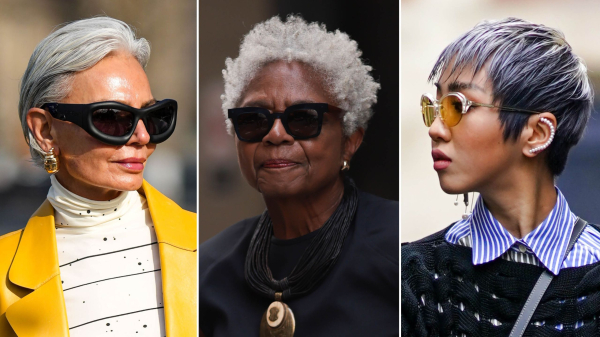
20 Short Gray Hairstyle Ideas to Inspire Your Look—See Photos
 Photos: Getty ImagesSave this storySave this story
Gray hair has officially shed its old, undeserved reputation. Instead of something to cover with color, it's something to savor. More and more people are growing out and leaning into their shimmering silver, and the only thing cooler than embracing the color is figuring out the haircut that makes the most of it in a way that’s very you. And it just so happens that gray hair looks stunning in a variety of short styles.
Whether your particular version of gray hair is bright white, a steely salt-and-pepper, or somewhere stunningly in-between, certain cuts bring out the dimension of your shade and the best of your texture. “For women embracing their natural hair color and allowing the gray to shine, always consider a few things: the time you want to spend in the morning, whether you’re going for a more polished or lived-in look, and if your texture can support the style you’re looking for,” says Sophie Rose Gutterman, a hairstylist based in Los Angeles. “Embracing the gray is all about an easier lifestyle, and focusing on the cut will require less time in the mornings.”
That doesn't mean you're limited to one or two conventional crops, though. Some of the trendiest hairstyles—we’re talking tousled pixies, timeless bobs, and modern shags, to name a few—look especially incredible with gray hair. Ahead, we've rounded up the best short haircuts for gray hair, along with expert tips on who each shape suits best and why these particular styles make the most of silver.
Meet the experts:
- Kendra Alia is a hairstylist based in Orlando.
- Katherine Brown is a hairstylist based in Boston.
- Marcos Diaz is a hairstylist based in New York City.
- Sophie Rose Gutterman is a hairstylist based in Los Angeles.
- Chris Russell is a hairstylist based in Los Angeles.
Bob
 Photo: Getty Images
 Photo: Getty Images
 Photo: Getty Images
 Photo: Getty Images
There are few haircuts more simultaneously classic and contemporary than the bob, a blunt style that typically falls somewhere between the cheekbones and the shoulders. “Gray hair has beautiful dimension, and a bob showcases those variations beautifully,” says Marcos Diaz, a New York City-based hairstylist. “Whether the hair is straight, wavy, or curly, the shape creates structure while allowing the natural color to take center stage.”
Katherine Brown, a hairstylist at Boston’s East West Salon, has noticed that as many of her clients get more gray, they also lose some of their density, which makes a bob a particularly appealing style. “Bobs can be a great way to help with this because keeping it one length can make the ends feel thicker and fuller overall,” she says. However, she notes that one-length styles mean more maintenance and routine trims.
Diaz recommends keeping the finish soft and touchable rather than overly polished. “A lightweight leave-in like DevaCurl Mist of Wonders Leave-In adds hydration and shine without weighing the hair down,” he says. If you prefer a sleeker look, however, Brown suggests blow-drying with a round brush, then adding a texture spray like Color Wow Style on Steroids to bring back any volume lost during the blow-dry.
 Save to wishlist
DevaCurl
Mist of Wonders Leave-In
Amazon
Ulta Beauty
 Save to wishlist
COLOR WOW
Style on Steroids
Amazon
Ulta Beauty
Sephora
Pixie
 Photo: Getty Images
 Photo: Getty Images
 Photo: Getty Images
 Photo: Getty Images
“A pixie is great for gray hair because [the texture] can be a little more coarse, and that’s great for volume,” says Brown. And because it’s so cropped, that means less is more when it comes to styling—less time and less product. All you need is styling cream or texture paste.
Chris Russell, a hairstylist based in Los Angeles, suggests using a “tiny amount” of your styling product—just enough to create separation between the layers, while maintaining softness. “We’re not trying to have gelled spikes,” he says. Gutterman likes STMNT Matte Paste because you can reshape your hair throughout the day.
 Save to wishlist
STMNT
Matte Paste
Amazon
 Save to wishlist
RŌZ
Salt Scalp Scrub Exfoliating Shampoo
Nordstrom
Sephora
Revolve
Gutterman also recommends using an exfoliating shampoo when you have a pixie cut because product buildup can be that much more apparent on such short hair—especially if it leans lighter gray or white. We’re fans of Rōz Salt Scalp Scrub Exfoliating Shampoo, which clears away flakes and residue with both physical and chemical exfoliation ingredients.
Bixie
 Photo: Getty Images
 Photo; Getty Images
 Photo: Getty Images
 Photos: Getty Images
One of the biggest beauty trends of the 1990s (the author of this article can speak from personal experience), bixies are the best of both a bob and a pixie. “It sits around where a bob would, but it involves the texturizing and layering that a pixie has,” Brown says, adding that it’s perfect for embracing textured hair because it doesn’t need to be styled with a blow-dryer as much.
“This cut makes gray hair look modern,” says Russell. “The piece-y layers separate the different silver tones beautifully and create natural movement, so the color almost styles itself.” Okay, so not entirely itself. He recommends working a lightweight texture paste or styling cream through the ends to create definition without losing softness. The Allure Best of Beauty Award-winning Bumble & Bumble Bb. Hairdresser’s Invisible Oil Long Last Styling Cream keeps gray hair from getting frizzy, and we like LolaVie Sculpting Paste for a more matte, not-stiff finish.
 Save to wishlist
Bumble and Bumble
Bb. Hairdresser’s Invisible Oil Long Last Styling Cream
Amazon
Nordstrom
Ulta Beauty
 Save to wishlist
LolaVie
Sculpting Paste
Amazon
Ulta Beauty
Afro
 Photo: Getty Images
 Photo: Getty Images
Orlando-based hairstylist Kendra Alia believes the Afro, in which coils are picked out into a rounded shape, is the ideal style for gray hair. “Like gray hair, Afros are freeing. It’s an organic style similar to how grays grow,” she says. And whether worn close to the crown or extra-voluminous, it exudes confidence.
Caring for the curls of an Afro is just as important as styling them. Gutterman says it starts with washday, and she recommends incorporating a purple toning shampoo like Danger Jones Killer Blonde Shampoo or Matrix So Silver Purple Shampoo to help keep silver from turning yellow. Instead of a regular conditioner, use a more intense hair mask for curly hair like the SheaMoisture Raw Shea Butter Deep Moisturizing Masque. For those who like to use a diffuser on their curls, Russell picks the Sutra Heat Guard Hair Mask.
 Save to wishlist
Danger Jones
Killer Blonde Shampoo
Amazon
 Save to wishlist
Matrix
So Silver Purple Shampoo
Amazon
Ulta Beauty
Whether you prefer a gel or a mousse, Alia says either formula will enhance coil definition and allow for styling flexibility. “When styling your hair, start with a small section in the back and learn how your pattern wants to be treated,” she says, “Everyone will approach styling [an Afro] differently, and that’s okay.”
 Save to wishlist
SheaMoisture
Raw Shea Butter Deep Moisturizing Masque
Amazon
 Save to wishlist
Sutra Beauty
Heat Guard Hair Mask
Amazon
Nordstrom
Short shag
 Photo: Getty Images
 Photo: Getty Images
 Photo: Getty Images
 Photo: Getty Images
When you picture a shag, you might imagine something long, like the super-trendy wolf cut, but above-the-shoulder shags are among the most versatile for silver hair. Brown says that for thick, textured hair, it’s great for removing bulk and making the hair feel a lot lighter. And for thinner hair, it creates the illusion of fullness, according to Russell.
“This style is particularly flattering on gray hair because the layers reflect light differently, emphasizing the natural variation found in silver strands,” Diaz says. “It also works beautifully across straight, wavy, and curly hair, making it an incredibly adaptable choice.”
Diaz adds that it’s best to let the layers move naturally rather than aiming for perfection because that slightly undone look is what really gives the haircut its personality.
Russell agrees. “I usually encourage clients to work with their natural texture instead of against it,” he says. “A texture spray or curl-enhancing cream keeps the haircut looking effortless rather than polished and ‘done.’” And, of course, we’ve got the Allure Readers’ Choice Award winners for exactly that: Living Proof Full Dry Volume & Texture Spray adds oomph while also protecting hair from any heat styling you may do, and Ouai Curl Crème can be used for definition on wet and dry hair.
 Save to wishlist
Living Proof
Full Dry Volume & Texture Spray
Amazon
Nordstrom
Ulta Beauty
 Save to wishlist
Ouai
Curl Crème
Amazon
Ulta Beauty
Sephora
Asymmetrical
 Photo: Getty Images
 Photo: Getty Images
We’ve come a long way from the heavily styled inverted bobs of the Y2K era. Today’s asymmetrical styles—where one side of the hair is left intentionally longer than the other—have more of an editorial, fashion-forward feeling, especially on gray hair.
“Gray hair pairs beautifully with this shape because the clean lines emphasize the natural brightness and dimension of silver tones,” Diaz says, adding that it’s a confident look that works on multiple textures and can be tailored to suit virtually any face shape.
Russell says the key to keeping it looking high-end and contemporary is in the styling. “Keep the shape clean so the asymmetry stands out,” he says. “A smoothing cream before styling and a lightweight serum will add polish without making the hair feel heavy.” We love Virtue Un-Frizz Hair Styling & Smoothing Cream for its ability to lock out humidity, and Chris McMillan The Glassy Smooth Hair Oil makes it super easy to finish your look with frizz-free shine.
 Save to wishlist
Virtue
Un-Frizz Hair Styling & Smoothing Cream
Amazon
Nordstrom
Dermstore
 Save to wishlist
Chris McMillan
The Glassy Smooth Hair Oil
Sephora