Manifesting Extends Its False Promise to Beauty
 Illustration by Molly Dickson; Photos: iStockSave this storySave this story
For 20-year-old Lauren, from Ontario, her best-kept beauty secret isn’t stashed in her makeup bag or hidden in her medicine cabinet—it's in her mind. She has spent years staring at other women's faces on Pinterest, cataloguing features she wants for herself, not as inspiration, but as a tool for visualisation. According to Lauren, having a clear image in her head of the physical characteristics she wants to attain, be it straight teeth or long hair, means she is better able to manifest those desired changes in her appearance. “The image doesn’t have to be a celebrity or model,” she explains. “It’s just whatever I resonate with and aspire to look like.”
The idea that, through the power of belief, we can effectively “think” a goal into becoming reality was instilled in Lauren as a young child. Her mother was a devotee of Rhonda Byrne’s The Secret, the 2006 best-selling book that helped bring manifesting into the mainstream. But it wasn’t until Lauren’s teenage years, after she stumbled across a video from HotHighPriestess—an internet personality with 1.2 million Instagram followers and a $7-a-week manifestation app called Stella—about how she had manifested her dream body with just her thoughts, that Lauren began to consider whether it might be possible to use this practice to alter her own appearance. She was already deep in the world of YouTube beauty tutorials, so for her, it felt like the next logical step.
At the start, Lauren’s goal was an overall “glow up”: clearer skin, “striking” eyes, healthier hair, better style. She would set aside time—from five minutes to half an hour—to visualise her desired look. The results came gradually, Lauren says, claiming that she saw her skin clear up, her eyes lighten slightly, and her cheekbones become more pronounced within a couple months. The changes didn't seem dramatic to her at first, but she got the sense manifestation was working when people began to compliment her appearance. More specifically, she manifested a “lethal face card,” using the phrase as part of an affirmation. “People then started commenting on my TikTok: ‘Oh my God, you have such a lethal face card’, ‘Your face card is so lethal’,” she says. “That kind of freaked me out.”
Peddling an illusion
Lauren isn’t alone in her belief in manifestation. Almost two decades after The Secret, Roxie Nafousi’s book Manifest: 7 Steps to Living Your Best Life, published in 2022, sold more than a million copies worldwide. In 2024, the Oxford Dictionary named “manifesting” its Word of the Year. Across social media, there are videos of people claiming to have manifested everything, even their soulmate or dream home. It was only a matter of a time until people like Lauren began applying the method to their physical appearance, with videos of people claiming to have achieved bigger breasts, different eye color, longer hair, and even increased height through thought alone racking up millions of views (which, given the nature of social media, is obviously not a measure of credibility). By focusing on changing immutable elements through mind power alone, the manifestation practices of Byrne and Nafousi—which promote aligning visualization with action—entered the world of magical thinking.
Naturally, an entire cottage industry has emerged around the trend. Self-styled “coaches,” “gurus,” and manifestation experts are profiting from promises that say, with the right mindset, they can teach their followers how to think themselves hot. Some have apps, like HotHighPriestess, while others offer online mentoring sessions; many create or promote beauty subliminals, audio recordings containing hidden, positive affirmations that can now be found all over YouTube and Spotify. “There is a money making machinery behind all of this manifesting content,” notes Anna Schaffner, PhD, a former professor of cultural history at the University of Kent. “The message is often deeply commercial, but couched in esoteric and spiritual language.”
Among these manifestation coaches is Kimberlee, age 26. She promises to help clients achieve physical transformations through one-to-one mentorship sessions priced at $350 for an hour. In most states, that’s more than the cost of an hour-long (out-of-pocket) appointment with a licensed therapist (which Kimberlee is not).
Kimberlee turned to manifesting appearance changes in 2019, during a difficult period in her life. After losing her mother, she’d gained weight. When she tried to lose it, nothing seemed to work. She had already been practicing manifestation in other areas of her life, particularly for financial success, so the idea of using it for weight loss didn’t feel entirely out of reach. “It dawned on me one time: I could actually just manifest this,” she says, claiming the pounds dropped off over the next five months. “I wasn't working out as hard as I used to, I wasn't starving myself like I used to,” she recalls of the period when she was manifesting weight loss. “I was eating just about anything that I wanted to. It felt like [the weight] magically fell off.”
“At the end of the day, a lot of how we look is genetically determined and constrained by our resources."
Kimberlee now coaches people in how to attain their own manifestation goals. She’s currently working with a client who is hoping to achieve a smaller nose. “I repeatedly tell her: ‘You have your dream nose,’” Kimberlee says of their sessions. “It’s working, because she tells me there has been some movement—she’s noticing her nose getting smaller.”
It probably shouldn’t be surprising that what these coaches are spouting is resonating with some audiences. According to Spate Data, the “manifesting” hashtag receives 109.9 million weekly views on TikTok, with #glowup and #glowuptips—two common hashtags used alongside manifesting content—each receiving hundreds of thousands of views weekly (117.9K and 305.2K respectively). Some people are also engaging in beauty manifesting as part of their effort to “looksmax,” a trend that was birthed in manosphere spaces; though, it’s important to note, most manifesting is free of the toxic overlay of looksmaxxing.
In our time-strapped world, the idea of a quick fix has never seemed so appealing. But there’s also the fact that, as researchers suggest, humans are “cognitive misers,” meaning we often rely on mental shortcuts to make fast and efficient judgments in new or time-pressured situations. “People are relatively poor at detecting deceptive information from others, because we usually just take them at face value,” says Janet Boseovski, PhD, a professor of psychology at the University of North Carolina at Greensboro and co-author of Beyond Body Positive, whose main areas of research include body image and child development.
With this in mind, it isn’t hard to understand how ”unscientific claims—in which influencers or coaches offer quick fixes, or simple strategies—appeal to many people precisely because they offer quick and seemingly simple solutions,” Dr. Boseovski adds. On top of this, says Charlotte Markey, PhD, a professor of psychology and director of the health sciences program at Rutgers University, “A promise like ‘you can think your way into a better face or body’ offers a seductive sense of control in a culture that constantly tells young women they are being evaluated visually.”
These coaches are peddling an illusion, Dr. Markey continues, pointing out that, “At the end of the day, a lot of how we look is genetically determined and constrained by our resources—money, time, other responsibilities.”
Manifesting can be understood as a way of trying to escape these constraints, and is a practice people often turn to in difficult times. For instance, in 2020, as COVID lockdowns began, Google searches for “manifesting” increased by 600%. Post-pandemic, in a time of economic and political uncertainty, it doesn’t feel like a coincidence that the phenomenon continues to be enormously popular.
Laila, 19, is among those drawn to the idea of manifesting beauty as a faster and more affordable way to reach her aesthetic goals, saving her money she might have spent on treatments and expensive products. After manifesting better grades in school, she decided, at age 16, to shift her focus to achieving a slimmer face, clearer skin, and longer hair. Like Lauren, she says the changes were subtle at first. “You see yourself every single day and you don’t really notice it,” she explains. “Then you look at a photo from a year ago and you’re like, ‘Oh wow.’”
When the placebo effect and puberty collide
If it’s hard to rationalize how young women like Lauren and Laila are convinced they’re able to change biological traits like face shape or eye color, there are psychological reasons why some people will report seeing results, says Dr. Markey. “Expectation effects, placebo responses, selective attention, and confirmation bias can all shape what people think they notice,” she points out. “Research shows that if we believe something to cause a change (we believe in a placebo), we may look at ourselves and think we look better because we expect to.”
"People ask me, ‘Oh, what type of product do you use?’ I tell them, ‘Just manifest it.’”
Dr. Markey also thinks it’s not a coincidence that almost all of the people Allure spoke to for this article report seeing changes in their teenage years, a time of immense and fast-paced physical and psychological change. In younger people, “some ‘results’ may also reflect ordinary developmental change over time,” she explains, “since puberty and ongoing maturation naturally change bodies and faces whether or not someone is using manifestation content.”
Laila admits to not being totally certain of the role puberty may have played in her transformation; but she’s convinced that manifestation is, at least, mostly responsible for the changes she saw. She recalls how, in high school, she didn’t have money for expensive products, like high-end shampoo and conditioner: “Still, my hair was really, really long, because I would manifest long hair growth,” she says. “I see ads [for beauty products], and I just feel like it’s a waste of time. You truly only need yourself. People ask me, ‘Oh, what type of product do you use?’ I tell them, ‘Just manifest it.’”
It’s not just the physical changes that occur during puberty that make teenagers vulnerable to beauty manifestation; peer pressure at school and from society at large also play a big role. Says Dr. Boseovski, “Adolescents, who are very sensitive to the rewards of peer acceptance and approval, may be more likely to accept guidance of this sort from peers or other influential models they admire, and less likely to rely on science-supported claims.”
Girls also tend to engage in more self-comparison at this age, making them more susceptible to this type of messaging, Dr. Boseovski notes. (Lauren, for example, says that she was initially attracted to manifesting content because of her insecurity, recalling, “I felt like I wasn’t the prettiest girl in the room, like I was never chosen.”) “Girls tend to lose the ‘rose-colored’ glasses that most have in early childhood where they feel very positive about themselves,” adds Dr. Boseovski. On top of this, “media exposure increases with age, and teens are inundated with messages about how they should look and ideas for how to ‘fix’ their ‘flaw.’”
An unhealthy focus
It’s true that research does suggest that mindset can influence behavior; and let’s be honest, actively engaging in positive thinking is certainly not a bad thing for young women. But what newer types of beauty manifesting promote—the idea that we can change often immutable things about our appearance through the power of our mind alone—is not only misguided, according to experts like Dr. Boseovski, it can also backfire, even if you go in with the best intentions.
She draws a clear distinction between visualization plus action, such as imagining yourself with a slimmer physique while also going to the gym, and magical thinking (especially when it comes to changing things that aren’t actually changeable, like height or eye color). “Certainly, thinking positively and setting goals for oneself can be associated with success when they are appropriately coupled with behavioral change,” Dr. Boseovski says. “But repeatedly using techniques like this that aren’t well grounded in science can lead to feelings of ‘learned helplessness’—giving up on your goals because nothing you do is working—and becoming passive. So, in the long term, this becomes even less of a tool for bringing about change.”
And while manifesting coaches claim to provide their followers improved confidence, Dr. Markey worries that these practices will only have the opposite effect. “One risk is that it keeps young women focused on the idea that their bodies are ongoing self-improvement projects rather than bodies worthy of care and respect right now,” she says, adding that: “Research on adolescents and young women suggests that appearance-focused environments, such as a bar or party, can increase self-comparison, self-objectification, and body dissatisfaction, especially during developmental periods when body image is already more vulnerable.”
The dangers of turning insecurity into daily ritual
For 20-year-old Kat, from New York, attempting to manifest appearance changes only worsened her self-loathing. From as early as age 10, she started listening to YouTube videos of subliminals in pursuit of things like fuller lips and longer eyelashes. “I was getting bullied at the time for my appearance, my weight, and just how I looked in general,” she says. “It felt like an easy solution to an issue that I did not know how to solve.” The specific changes she was chasing were very much shaped by conventional beauty standards. “I wanted to look like a model out of a magazine,” she recalls. (She’s not alone: The subliminal “Face Like a Model” has over 1.2 million streams on Spotify.)
Kat would play these subliminals, which could be up to 10 hours long, overnight. “It meant my appearance was literally the last thing I thought about before bed and the first thing I thought about when I woke up,” she says. Not seeing the desired results after listening to subliminals for some months was crushing: “I would think a lot about why the effort I was putting in manifesting wasn’t showing up, and I’d just be so pissed that the universe wasn't giving me what I wanted.”
From Dr. Markey’s perspective, the concern isn’t that subliminals and manifesting in general won’t magically change someone’s lips or eye color (they won’t); “it’s more that repeated appearance-focused listening may intensify body monitoring, reinforce dissatisfaction, and turn insecurity into a daily ritual,” she explains.
“Repeated exposure can make certain ideas feel more emotionally important or ‘true,’ even when there’s no scientific basis for them,”
The fear, for mental health experts, is that this unhealthy physical fixation could make people more attuned to what society says are their flaws. “Repeated exposure can make certain ideas feel more emotionally important or ‘true,’ even when there’s no scientific basis for them,” says Clint Salo, MD, the medical director of the Grove Recovery Community and a board-certified psychiatrist in Irvine, California, who specializes in behavioral health and risk-related decision making. “The brain naturally pays more attention to thoughts and cues that are repeated often, especially during adolescence.”
Of course, these messages may not be harmful just within online manifesting communities. “It’s not the case that we should only worry about messaging that purports to be subliminal. We should be as worried about the messaging [of inadequacy] that is out there in the world that girls and women are exposed to every single day, consciously,” says Dr. Boseovski. “This additional messaging may just be adding fuel to the already raging fire.”
A self-esteem crisis for women
Theiadora, a 21-year-old from the Netherlands, has more recently started to reflect on the harms of using certain subliminals for making changes to her physical appearance. She believes that some of the earlier subliminals she tried as a teenager did lead to actual changes, such as one recording specifically aimed at making curly hair straight. But she also recognizes that some of the “skinny girl” subliminals she used in the past, which contained affirmations about being able to stay full without eating, contributed to unhealthy eating habits and obsessive thinking about her body.
“It made me feel restless, like I was always looking for something about myself to change,” she says. “I started looking at myself a bit differently, more through the lens of what could be improved, rather than what already felt good.”
Dr. Salo says that the repetition of messages like “I can stay full without eating” can normalize restrictive thinking around food. “Over time, that may encourage someone to ignore hunger cues or associate eating with guilt,” he explains. “In vulnerable individuals, especially teens, that can contribute to unhealthy patterns around eating and body control…. If results don’t happen, people may assume personal failure. That can lead to shame, which tends to persist and lower self-esteem.”
It took a painful breakup a couple years ago for Theiadora to decide that it was time to stop listening to these kinds of subliminals. She has since switched to messages that focus more on self-love and developing confidence instead of specific appearance changes.
Rather than questioning the practice of manifesting more broadly, though, Theiadora thinks the problem lies with a handful of rogue subliminal creators. “Some creators use wrong or negative affirmations, so you can end up manifesting the opposite of what you want,” she says. Theiadora now only looks to “trusted” creators who are “careful and intentional” with their affirmations. She also makes her own subliminals that she shares on YouTube; she recently created a subliminal claiming to help people grow taller.
From Kimberlee’s perspective, when clients say they aren’t seeing results, the issue lies in the mindset of the client and level of commitment. “They might not be persistent enough or they don't want what they say they want bad enough,” she says. “I remind them, ‘Don’t be so hard on yourself, either. Give yourself a break. Do a lot of self-care.’”
The self-blame people feel when they don’t see results can be exacerbated when a coach reinforces the idea that they’re not manifesting correctly, says Dr. Markey. “When manifestation practices fail to produce visible appearance changes, young women may feel disappointed, frustrated, ashamed, or even more preoccupied with their looks,” she explains. “Instead of reducing insecurity, these practices can reinforce the idea that the body is a problem to fix and that failure reflects a personal deficiency, rather than an ineffective method.”
For Kat, not seeing results ultimately prevented her from finding self-acceptance. “It put me in this weird limbo spot where I felt like I can get more beautiful, but I don't truly know how, because I'm not letting myself,” she says.
Laila also acknowledges moments of frustration with manifesting, especially when it comes to her acne: “I think to myself, What am I doing that’s wrong? But then I remember that wavering delays result, and that the only person that can really drag yourself out of it is you.”
Likewise, whenever Lauren is struggling to see results, she blames her own impatience. “The main challenge [with manifesting] is staying calm and consistent, instead of forcing it,” she says. Currently, Lauren is trying to manifest a straight jaw for a more symmetrical face, but it’s something that has been taking longer than she anticipated: “My jaw is crooked because I held back emotionally,” she says. “If I want to manifest it straight, I need to work through past trauma.”
All of the experts we spoke to repeatedly emphasize just how damaging this constant effort to alter our physical appearance can be. The negative effects of social media on young women’s body image, in particular, has been well documented over recent years, resulting in research and legislative action by some governments. “For several decades now, science has known that chronic dissatisfaction with one’s body or appearance is harmful for both psychological and physical health. So this is truly a public health issue for women,” says Dr. Boseovski. “Body dissatisfaction is related to mental health issues, including depression, anxiety, eating, and body dysmorphic disorders. But it is also related to more ‘everyday’ issues with our self-image, such as a tendency to ruminate on negative experiences, and a hyper-sensitivity to the negative.”
Kat knows now that she was never to blame for her manifesting goals that failed to materialize, and credits therapy with helping her to develop a better relationship with her body. “I definitely realize now it’s not possible to manifest physical-appearance changes…. but I’ve been feeling better in how I perceive myself,” she says. “Nowadays, I try to treat myself more as a friend and someone I love closely, rather than as my enemy.”
9 Best Foundations for Mature Skin That Smooth Texture and Blur Lines
 CARLOS and ALYSESave this storySave this story
As your skin changes, your makeup should evolve with it, and that starts with finding the best foundations for mature skin. These formulas deliver even texture, a healthy radiance, and fine-line-blurring coverage without clinging to dryness or settling where you don’t want it. Many of today’s standout bases are infused with skin-care power players such as hyaluronic acid, vitamin C, and even retinol to tackle common concerns—think: fine lines, dark spots, redness, and dehydration.
Our Top Foundations for Mature Skin
- Best Overall: Armani Beauty Luminous Silk Foundation, $69
- Best for Dry Skin: Chanel Les Beiges Healthy Glow Foundation, $69
- Best Medium Coverage: Lancôme Rénergie Lift Makeup Foundation SPF 27, $63
- Best Lightweight: Jones Road Beauty What the Foundation, $46
Frequently Asked Questions
- What to consider when looking for a foundation for mature skin
- How to prep mature skin for foundation
- How to apply foundation on mature skin
- Meet the experts
- How we test and review products
- Our staff and testers
We put in the legwork—consulting makeup artists and leaning on our trusted team of editors—to uncover the foundations that stay smooth, flexible, and crease-free, no matter how expressive you are.
Best Overall: Armani Beauty Luminous Silk Foundation
 Save to wishlist
Armani Beauty
Luminous Silk Foundation
Nordstrom
Sephora
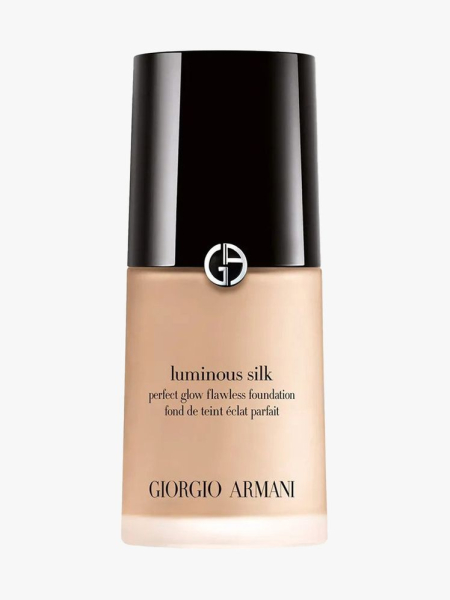
Why it's worth it: Constantly name-dropped by makeup artists and enthusiasts, Armani Beauty’s Luminous Silk Foundation has earned its icon status with ample accolades, including an Allure Best of Beauty Award. Countless makeup artists, including Beau Nelson and Amrita Mehta, count Meghan Markle's favorite foundation as a go-to for mature clients due to its soft-focus finish and weightless texture. "This one has been a staple in my kit for over 15 years," New York City-based makeup artist Lisa Aharon attests. "It blurs pores and fine lines while leaving the skin with a fresh finish," she says, adding that the medium coverage is ideal for concealing sun spots and other imperfections such as blemishes.
New York-based makeup artist Lauren D’Amelio Ventre loves that it’s packed with hydration—something aging skin needs more of—and helps make the skin look plumper and smoother. “It leaves a beautiful and flawless finish, and the formula melts into the skin seamlessly,” she says. Even though it’s ultra-hydrating, it’s also lightweight and won’t turn greasy throughout the day, which is why she often reaches for it for long events like weddings.
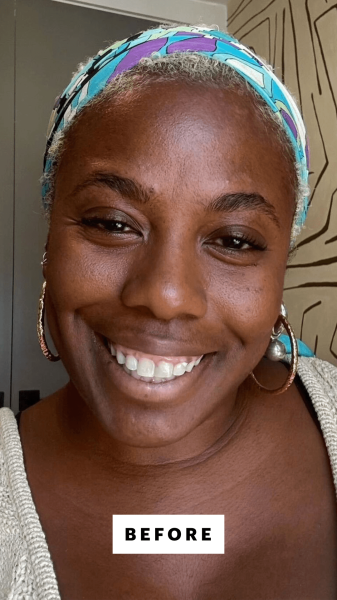
Allure creative director Amber Venerable before applying the Armani Beauty Luminous Silk Foundation
Amber Venerable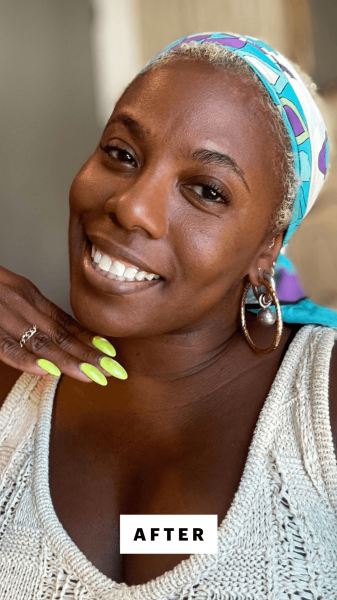
Venerable after applying the Armani Beauty Luminous Silk Foundation
Amber Venerable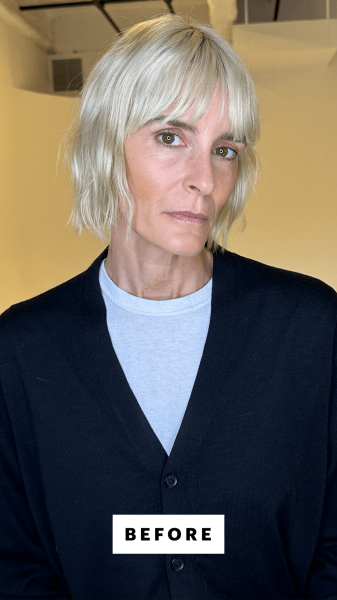
Allure tester before applying the Armani Beauty Luminous Silk Foundation
Allure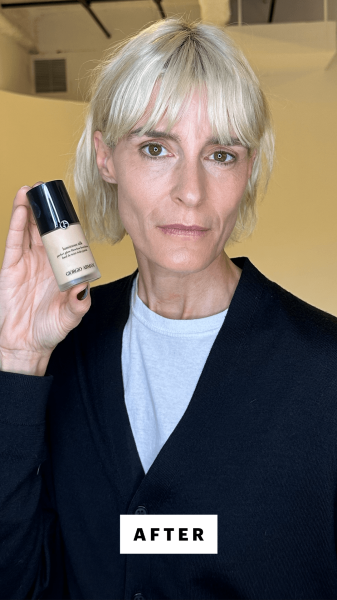
Allure tester after applying the Armani Beauty Luminous Silk Foundation
Allure
Tester feedback from creative director Amber Venerable
LargeChevron
“I like minimal to light foundation coverage and I thought this had great coverage while also being very lightweight on my skin. My skin was radiant and glowing, so it lives up to the term luminous to say the least! Love it!”—Amber Venerable, creative director
More to know
LargeChevron
- Key ingredient: glycerin
- Finish: radiant
- Coverage: medium-to-full
- Shades: 44
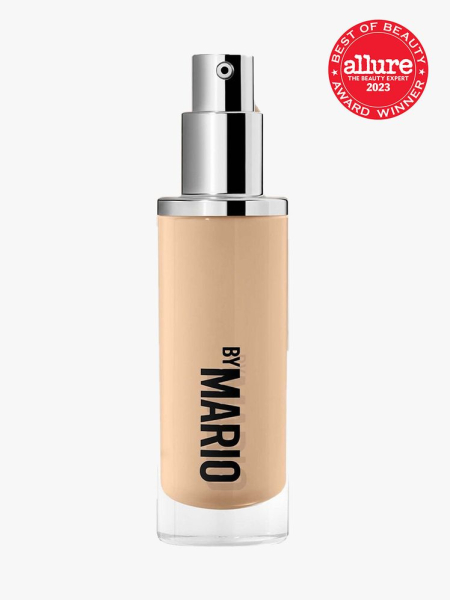
Best Full-Coverage: Makeup by Mario SurrealSkin Foundation
 Save to wishlist
Makeup by Mario
SurrealSkin Foundation
Sephora
Allure tester applying the Makeup by Mario SurrealSkin Foundation
Allure
Why it's worth it: Our 2023 Best of Beauty Award winner for best full-coverage liquid foundation went to Makeup by Mario's SurrealSkin Foundation—but don’t let the “full-coverage” label fool you. This formula is incredibly lightweight, buildable, and never cakey. Karol Rodriguez, a NYC-based makeup artist, said this foundation is one of her go-tos for people with exceptionally dry skin, which mature folks are prone to. Founder Mario Dedivanovic recommends using just one pump, applying it where you need the most coverage, and building from there. That’s easy to do thanks to skin-friendly ingredients like polyglyceryl-6 polyricinoleate (an ester that gives it a silky, glowy—not greasy—finish), plus hydrating staples like glycerin, grapeseed oil, and sunflower oil to help lock in moisture.
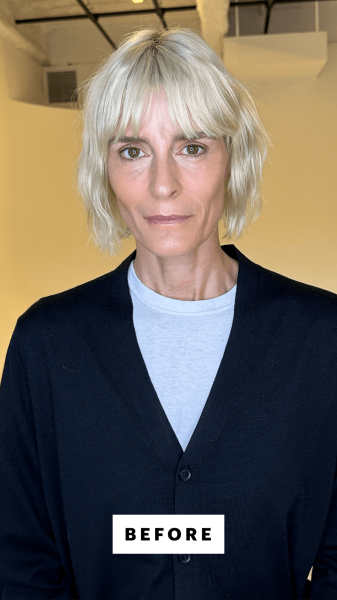
Allure tester before applying the Makeup by Mario SurrealSkin Foundation
Allure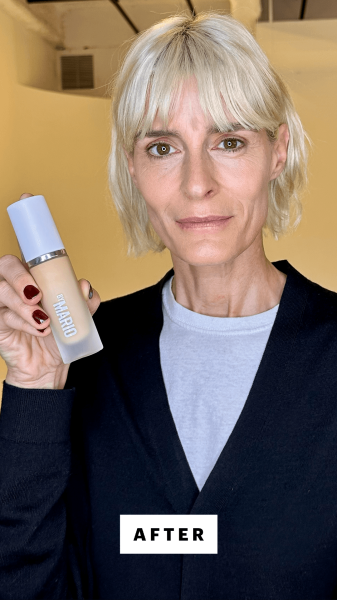
Allure tester after applying the Makeup by Mario SurrealSkin Foundation
Allure
Editor tip
LargeChevron
Even though it leaves a slightly dewy finish, our testers with oily skin found it held up beautifully throughout the day without turning shiny. Want something sheer? Mix a pump with your favorite moisturizer and pat it on with your fingers for a more natural, skin-tint effect.
More to know
LargeChevron
- Key ingredients: glycerin, grapeseed oil, sunflower oil
- Finish: satin
- Shades: 39
Best for Dry Skin: Chanel Les Beiges Healthy Glow Foundation
 Save to wishlist
Chanel
Les Beiges Healthy Glow Foundation
Chanel
Nordstrom
Ulta Beauty
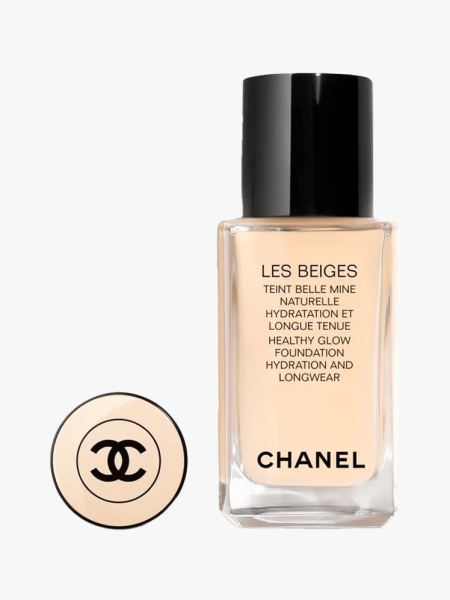
Why it's worth it: It may be 40% water, but Chanel’s Les Beiges Healthy Glow Foundation is no tinted moisturizer in disguise. The hydrating glycerin-based formula floods skin with moisture, while a mix of lightweight meadowfoam seed oil and silicones keeps the texture cushioned, comfortable, and smooth. “It leaves the skin hydrated and plump, while the radiant finish helps to create a glowy, seamless, and skin-like blend,” says Mehta. “It feels like a lightweight serum but offers light-to-medium, buildable coverage that keeps skin looking fresh and natural.” Aharon agrees, noting that mature skin often leans dry and dull, making a radiant finish ideal. With mica and other soft, light-reflecting pigments as well as a diffusing texture, it’s guaranteed to leave your complexion glowing.
Tester feedback from Allure contributing commerce writer Christa Joanna Lee
LargeChevron
“I’ve always had slightly uneven skin tone, and now that it’s coupled with post-pregnancy melasma, I need more coverage than my usual tinted moisturizer. Les Beiges goes on smooth and creamy, melts in instantly, and evens everything out without looking like I’m wearing makeup. It has that your-skin-but-better vibe, which for me means it’s breathable, lightweight, and with just the right amount of glow.” —Christa Joanna Lee, Allure contributing commerce writer
More to know
LargeChevron
- Key ingredients: glycerin, meadowfoam seed oil, jasmine stem extract, mica
- Finish: radiant
- Coverage: sheer-to-medium
- Shades: 42
Best Medium Coverage: Lancôme Rénergie Lift Makeup Foundation SPF 27
 Save to wishlist
Lancôme
Rénergie Lift Makeup Foundation SPF 27
Amazon
Nordstrom
Ulta Beauty
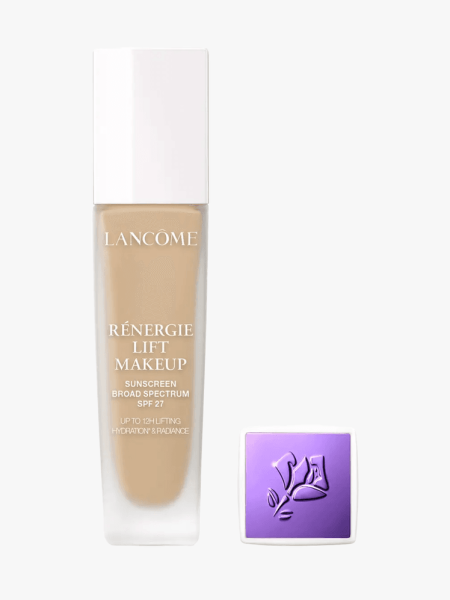
Why it's worth it: Lancôme’s Rénergie Lift Makeup Foundation doesn't just happen to work well on mature skin; “this formula feels like it was made with intention for people with fine lines and wrinkles," says Magen Grays, a makeup artist based in Atlanta. Beyond the skin-like finish, the formula is packed with nourishing ingredients like ceramides to support the barrier, soybean oil and sorbitol to replenish moisture, and caffeine to “bring skin back to life,” says Grays. Lightweight silicones further create a “smoothing, blurring effect that doesn’t emphasize uneven skin texture,” she says. “It’s radiant without being heavy, and it moves with your face instead of sitting on top of it.
Editor tip
LargeChevron
The built-in SPF 27 is a welcome bonus, but since it falls just shy of the American Academy of Dermatology's recommended SPF 30 for daily sun protection—and most people don't apply enough foundation to achieve the labeled SPF anyway—it should be considered an extra layer of protection, not a replacement for your dedicated sunscreen.
More to know
LargeChevron
- Key ingredients: caffeine, vitamin E, iris extract
- Finish: natural/radiant
- Coverage: medium
- Shades: 20
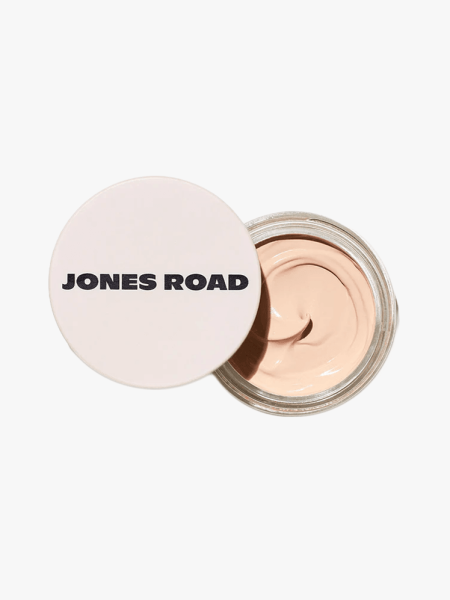
Best Lightweight: Jones Road Beauty What the Foundation
 Save to wishlist
Jones Road
Beauty What the Foundation
Jones Road
Why it's worth it: It makes sense that Bobbi Brown, who helped define the "no-makeup makeup" movement of the '90s—a philosophy that's just as relevant today—would create a foundation that wears more like skin than makeup. Jones Road Beauty's What the Foundation is an ultra-nourishing complexion tint that "blends seamlessly into the skin, leaving you with an even, fresh complexion that looks like your skin on its best day," says Kat Dorn, a makeup artist based in New York City. The lightweight, silky feel comes from jojoba oil, olive oil, and sodium hyaluronate (a form of hyaluronic acid), which keep skin comfortably hydrated throughout the day. If you're looking for full coverage, this isn't it. But if your goal is light to medium coverage that subtly evens your complexion, this formula feels so weightless, you'll forget you're wearing foundation at all.
Editor tip
LargeChevron
Because the formula is rich in nourishing oils, you may notice a little separation over time. If that happens—or if it's applying a bit unevenly—simply give it a quick stir with the back of a makeup brush or a spatula before applying.
More to know
LargeChevron
- Key ingredients: sodium hyaluronate, jojoba oil, olive oil
- Finish: natural/radiant
- Coverage: light to medium
- Shades: 16
Best for Sensitive Skin: Kosas Revealer Skin-Improving Foundation SPF 25
 Save to wishlist
Kosas
Revealer Skin-Improving Foundation SPF 25
Amazon
Nordstrom
Sephora
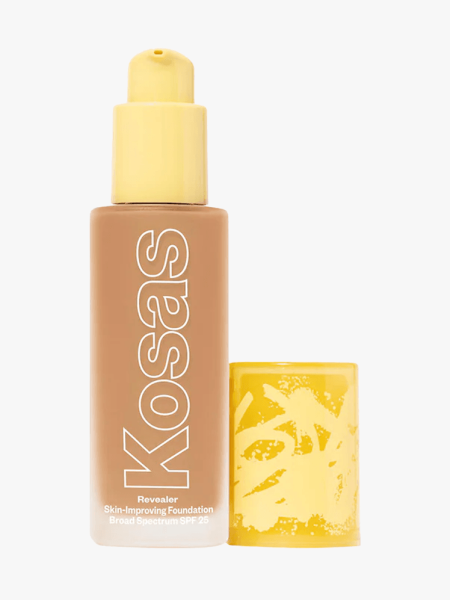
Why it's worth it: If you glanced at the ingredient list without seeing the bottle, you'd probably assume it belonged to a moisturizer—not a foundation. When it launched, the Kosas Revealer Skin-Improving Foundation also became something of an unofficial Allure office uniform—there was a stretch where it seemed like every beauty editor was wearing it because of its dewy finish and ultra-creamy texture.
“If you have reactive or sensitive skin, its gentle ingredients enhance your complexion without irritation,” says Grays. The formula is packed with staples like niacinamide, which "works with your skin's natural chemistry to improve overall skin texture by rebuilding a lipid layer, minimizing the appearance of pores, and preventing UV damage and inflammation as an antioxidant," Seattle-based board-certified dermatologist Brandith Irwin, MD, previously said. There’s also everyone’s fave hydrator, hyaluronic acid, to “bind water to collagen, trapping it in the skin, so that skin can appear plumper, dewier, and more hydrated," Beverly Hills-based board-certified dermatologist Tsippora Shainhouse, MD, previously explained.
Editor tip
LargeChevron
The formula is rounded out with barrier-supporting squalane and plumping peptides, so if your mature skin also struggles with dryness, this one checks all the boxes.
More to know
LargeChevron
- Key ingredients: niacinamide, squalane, hyaluronic acid, peptides
- Finish: natural/radiant
- Coverage: medium
- Shades: 36
Best Drugstore: e.l.f. Cosmetics Soft Glam Satin Foundation
 Save to wishlist
E.L.F. Cosmetics
Soft Glam Satin Foundation
Amazon
Ulta Beauty
Walmart
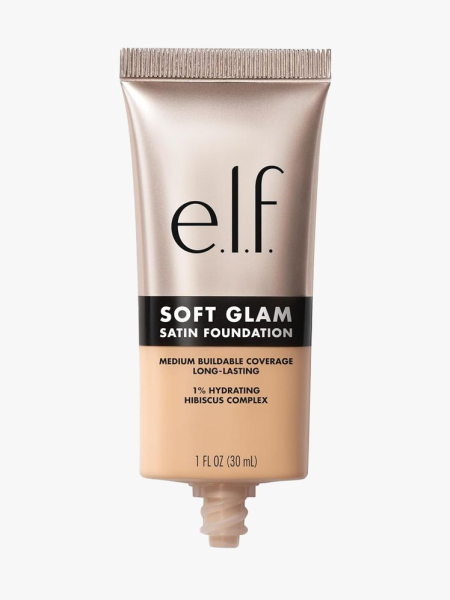
Why it's worth it: E.l.f. Cosmetics’ Soft Glam Satin Foundation is "like a superfood smoothie for the face," says Los Angeles-based makeup artist Scott Barnes—and at just $9, it costs about the same as one. The lightweight, breathable formula is infused with the brand's 1% Hydrating Hibiscus Complex, along with antioxidant-rich pomegranate and goji berry extracts to help keep skin hydrated and comfortable throughout the day. It delivers buildable medium coverage with a natural satin finish that strikes the sweet spot for both dry and oily skin. Barnes also loves how seamlessly it blends into skin, and he calls out the slim squeeze tube as a travel-friendly bonus that's easy to toss into a gym bag or carry-on.
Editor tip
LargeChevron
If you're wearing this on a hot, humid day or have oily skin, apply a blurring primer just through the T-zone to help keep shine at bay without sacrificing its natural satin finish.
More to know
LargeChevron
- Key ingredients: 1% Hydrating Hibiscus Complex, pomegranate, goji fruit
- Finish: satin
- Coverage: medium
- Shades: 36
Best Long-Wearing: Nars Natural Radiant Longwear Foundation
 Save to wishlist
Nars
Natural Radiant Longwear Foundation
Nordstrom
Ulta Beauty
Sephora
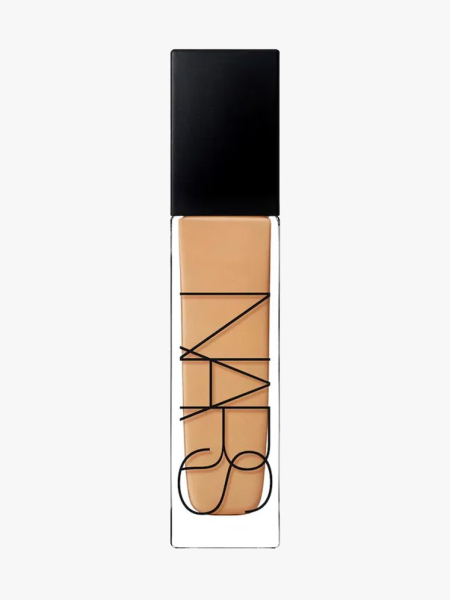
Why it's worth it: “Long-wearing” and “radiant” might sound like an oxymoron when talking about foundations for mature skin, but Nars’s Natural Radiant Longwear Foundation proves they can coexist. The medium-to-full coverage feels surprisingly lightweight and breathable, yet stays put for up to 16 hours without fading, creasing, or clinging to dry patches. Its longevity comes from a pigment system that prevents color from oxidizing and helps it blend with your natural tone rather than sitting on top. Raspberry, apple, and watermelon extracts give the formula a smoothing, hydrating finish. “When someone wants a more polished result but still wants skin to look alive, this is a go-to,” says Renée Loiz, a makeup artist based in Los Angeles. “It holds up exceptionally well and maintains radiance without breaking down or settling into fine lines.”
Editor tip
LargeChevron
This formula already contains humectants like glycerin, sodium PCA, and sodium lactate to maintain hydration throughout the day, so you might want to apply a lightweight gel moisturizer underneath, especially if you have combination or oily skin.
More to know
LargeChevron
- Key ingredients: raspberry, apple, and watermelon extracts
- Finish: radiant
- Coverage: medium-to-full
- Shades: 36
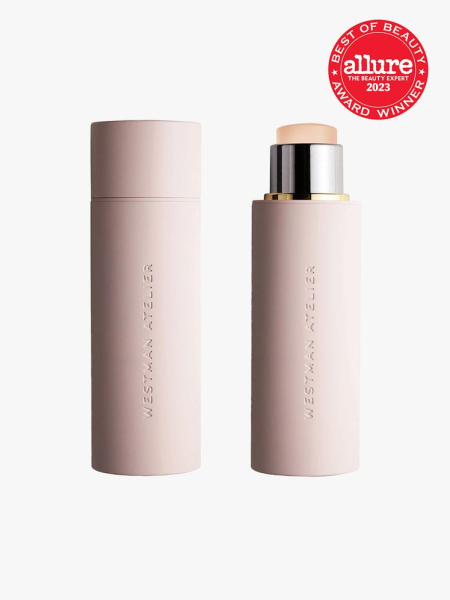
Best Foundation Stick: Westman Atelier Vital Skin Foundation Stick
 Save to wishlist
Westman Atelier
Vital Skin Foundation Stick
Nordstrom
Credo Beauty
Sephora
Why it's worth it: Westman Atelier’s Vital Skin Foundation Stick, a 2022 and 2023 Best of Beauty Award winner, has a second-skin-like finish well-suited for mature skin, plus it's loaded with nourishing ingredients like squalane for moisture and phytosphingosine, a naturally occurring lipid found in the skin, to soothe. This cream formula melts into the skin, whether you apply it straight to your face or use a brush. "For radiance and a second-skin finish that doesn't settle into fine lines, I love this formula for mature skin," Aharon says. Due to calming ingredients like squalane and camellia seed oil, Aharon says this fragrance-free foundation is suitable for sensitive skin, regardless of age.
Editor tip
LargeChevron
We also love packing this travel-friendly stick in a shade or two deeper than your complexion to double as a cream bronzer.
More to know
LargeChevron
- Key ingredients: vegetable-derived squalane, berryflux vita extract, camellia seed oil, coconut oil
- Finish: natural
- Coverage: medium
- Shades: 20
Frequently Asked Questions
What to consider when looking for a foundation for mature skin
As you age, your complexion gains texture and leans toward the drier side. New York City-based, board-certified dermatologist Joshua Zeichner, MD, previously told Allure that this is because your skin produces less collagen and fewer natural lipids, such as ceramides and fatty acids, which leads to dehydrated skin and a weaker moisture barrier. When it comes to base makeup, "Fine or not-so-fine lines and larger pores can make foundation look mask-like at best and incredibly unflattering at worst," explains Los Angeles-based makeup artist Fiona Stiles. That's why finding a hydrating foundation is paramount for looking fresh. Tony Tulve, a New York City-based makeup artist, recommends choosing liquid foundations as they "act more like a second skin." Overall, finding a buildable-coverage formula with skin-plumping, fine-line-minimizing ingredients like hyaluronic acid and squalane is the key to a flawless, crease-free base.
How to prep mature skin for foundation
Before you touch your makeup brushes, prepping your skin is essential for creating the smoothest finish possible. "Moisture is key, so always make sure you start with a moisturizer that's hydrating but won't turn greasy and interrupt your foundation texture," Barose previously told Allure. Gucci Westman, a Los Angeles-based makeup artist, also emphasized being vigilant about moisturizing your whole face, especially the area around your eyes. Crystal Gossman, a New York City-based makeup artist, adds that layering on hydrating serums and essence toners will give the skin that juicy, plump feel and a natural tackiness to help foundation grip without needing a primer.
However, if you know you’ll be out and about all day—or have a special event—primer can be helpful for extra long-wearing benefits. Barose recommends blurring formulas and straying away from mattifying formulas. He also gives balm-like formulations (like Danessa Myrick's Yummy Skin Moisture Repair Balm Serum) kudos for conditioning your skin while locking makeup in place. "You also don't need to wear it all over the face,” he explains. “Focus on lines or [other areas] of your face [you want to] blur.”
How to apply foundation on mature skin
Tulve leans into the "less is more" philosophy when applying foundation to mature skin. Denser, full-coverage formulations may end up accentuating fine lines, so use a buildable formula you can layer to your desired finish for a seamless, second-skin-like result. "I apply foundation on the larger areas of the face first, like the cheeks and forehead, then I go in and tweak around the nose and the chin area," New York City-based makeup artist Sandy Linter previously told Allure. “Lastly, I'll apply concealer, plus a touch of foundation under the eye area.”
If you apply your makeup with your fingers, you may want to swap your digits for a makeup sponge or foundation brush to ensure even coverage. "[Using your] fingers can look blotchy, uneven, or gloppy, which can make your lines come out more," Barose said. To buff the foundation in, Barose recommends moving the brush in circular motions. “This will help the foundation spread smoothly, even over hard-to-reach areas with lines and wrinkles,” he notes. To ensure a smooth, blotch-free canvas, you can use a damp sponge as a final step to buff and blend.
Meet the experts
- Lisa Aharon, a makeup artist based in New York City
- Lauren D’Amelio Ventre, a makeup artist based in New York City
- Crystal Gossman, a makeup artist based in New York City
- Magen Grays, a makeup artist based in Atlanta
- Brandith Irwin, MD, a board-certified dermatologist based in Seattle
- Sandy Linter, a makeup artist based in New York City
- Renée Loiz, a makeup artist and founder of Color May Vary, based in Los Angeles
- Amrita Mehta, a bicoastal makeup artist
- Beau Nelson, a makeup artist based in Los Angeles
- Tsippora Shainhouse, MD, a board-certified dermatologist based in Beverly Hills, California
- Fiona Stiles, a makeup artist based in Los Angeles
- Tony Tulve, a makeup artist based in New York City
- Gucci Westman, a makeup artist and founder of Westman Atelier, based in Los Angeles
- Joshua Zeichner, MD, a board-certified dermatologist based in New York City
How we test and review products
Before reviewing any makeup, we ask questions about a number of factors: What ingredients are in it? Does the brand offer a wide shade range that includes consumers with all skin tones and undertones? Is it safe for readers who have sensitive skin or wear contact lenses? Is it on the affordable side or more of a splurge? Is its packaging consciously designed or needlessly wasteful?
For our review of the best foundations for mature skin, we enlisted the help of multiple editors, writers, and contributors, with a particular focus on our 40-plus reviewers. We also relied heavily on trusted makeup artists to speak to the efficacy of these products on mature skin. This ensures our testing base spans different skin tones, genders, and dermatological conditions. We considered each product's performance across four primary categories: ingredients, wear and longevity, packaging, and inclusivity. For more on what's involved in our reporting, check out our complete review process and methodology page.
Our staff and testers
A beauty product is a personal purchase. You might be searching for a face cream to address persistent dryness or a new nail product to add to your Sunday self-care routine. You may simply be browsing for the latest launches to hit the hair market. No matter what you seek or your individual needs and concerns, Allure wants to ensure that you love anything we recommend in our stories. We believe that having a diverse team of writers and editors—in addition to the wide range of outside testers and industry experts we regularly call upon—is essential to reaching that goal.
After all, can we really say a skin-care product is the "best" for people over 50 if the only testers we’ve solicited opinions from are folks who have yet to hit 30? Can we honestly deem a high-end diffuser worthy of your hard-earned cash if it’s never been tested on curls? We’re proud that our staff spans a wide range of ages, skin tones, hair textures, genders, and backgrounds, which means that we are able to fairly assess any beauty product that comes into the beauty closet.